You wrote the book now, how do you actually get it into readers’ hands? If you are wondering how to publish a book, the process may seem complicated at first. From editing and proofreading to cover design, formatting, publishing platforms, pricing, and marketing, there are several important steps to complete. But with a clear plan, publishing becomes much easier to manage. This guide breaks down the entire publishing journey into simple, practical steps to help you turn your manuscript into a professional book and confidently launch it for readers.
How to Publish a Book?
Want to know how to get a book published? Well publishing process is not that simple. Getting a book published involves several stages, but taking the process step by step can make it far less daunting. From completing your manuscript and preparing it for publication to choosing the right publishing route and marketing your finished book, each stage plays an important role.
Whether you are researching book publishers in England or exploring self-publishingg and other publishing options, understanding the process can help you make informed decisions and avoid common challenges.
It doesn’t matter whether you choose traditional publishing or self publishing, the goal is the same. It’s to create a professional quality book, reach the right audience, and make it easy for readers to discover and purchase your work. The following steps can help you if you are considering how do I publish a book.
Finish and Polish Your Manuscript
The first step is to finish your manuscript. Take the time to refine and polish your draft before rushing into publication. Read through your manuscript several times and look for areas that need improvement. Check the story, structure, characters, ideas, pacing, grammar, and overall flow. Remove unnecessary sections and make sure the book provides a clear and enjoyable reading experience.
You can also ask beta readers to read your manuscript and give you honest feedback. Their opinions can help you identify problems you may have missed. Create a complete and strong manuscript before moving to the next stage.
Get Professional Editing
Once your manuscript is complete, professional editing can make a major difference in its quality. There are different types of editing depending on what your book needs:
- Developmental Editing: Focuses on the big picture, such as story structure, plot, characters, organization, and ideas.
- Copy Editing: Improves grammar, spelling, punctuation, sentence structure, and consistency.
- Proofreading: The final check for small mistakes before the book goes live.
For example, a fiction writer may need help improving the plot and characters, while a nonfiction writer may need help organizing chapters and explaining ideas more clearly. Refine your manuscript into a polished book that’s ready to captivate readers.
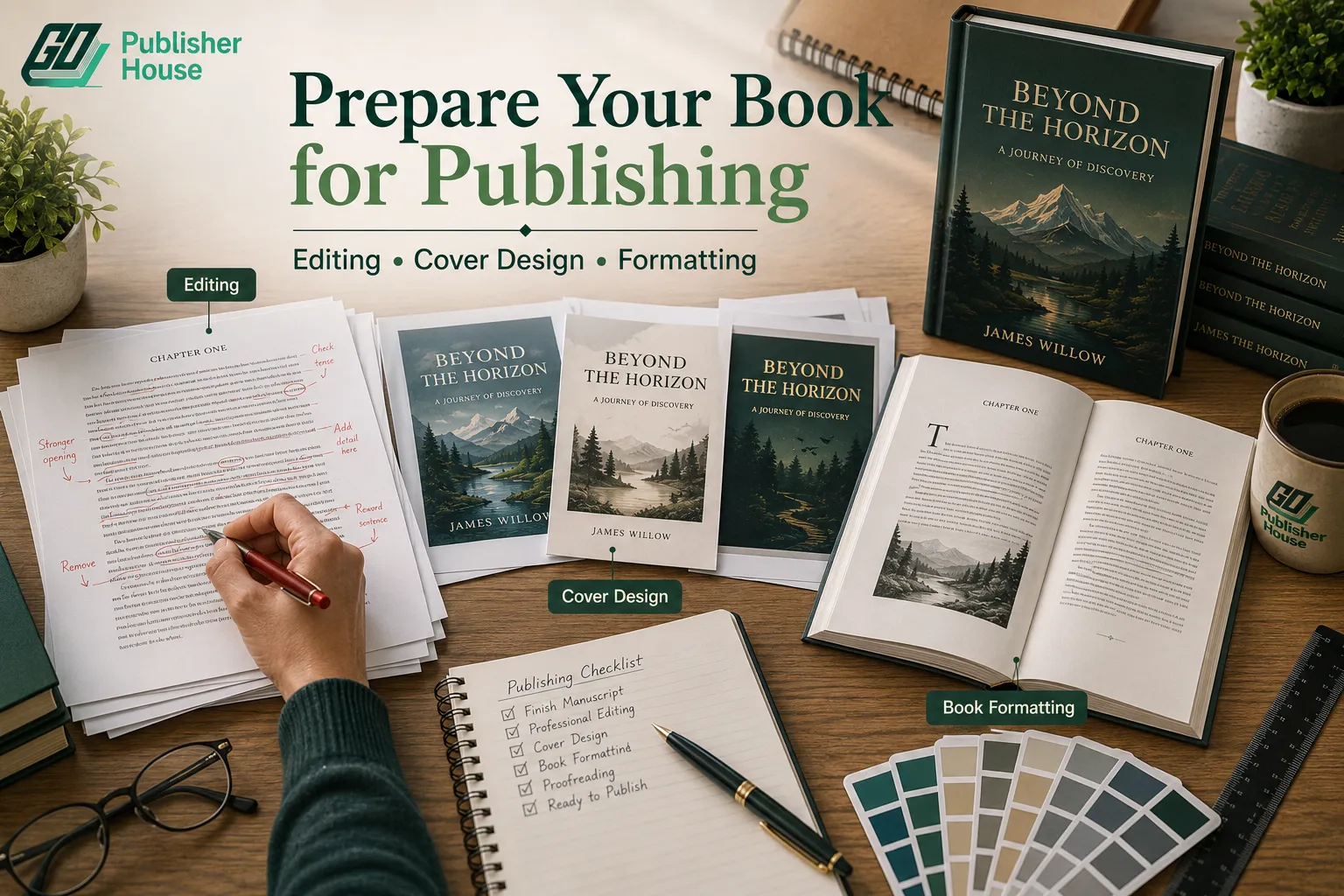
Create a Professional Book Cover and Format the Book
A book needs more than good writing. It also needs a professional appearance. Your book cover is usually the first thing potential readers see. It should look attractive while also matching your book’s genre. A debut novel, business book, children’s book, and thriller will all require different cover styles.
You also need to format the inside of the book correctly. For an eBook, formatting should work properly across different screen sizes and devices. For a printed book, you need to consider page size, margins, fonts, chapter headings, spacing, and other layout elements. You need to make your book look professional both inside and outside.
Prepare Your Book Metadata
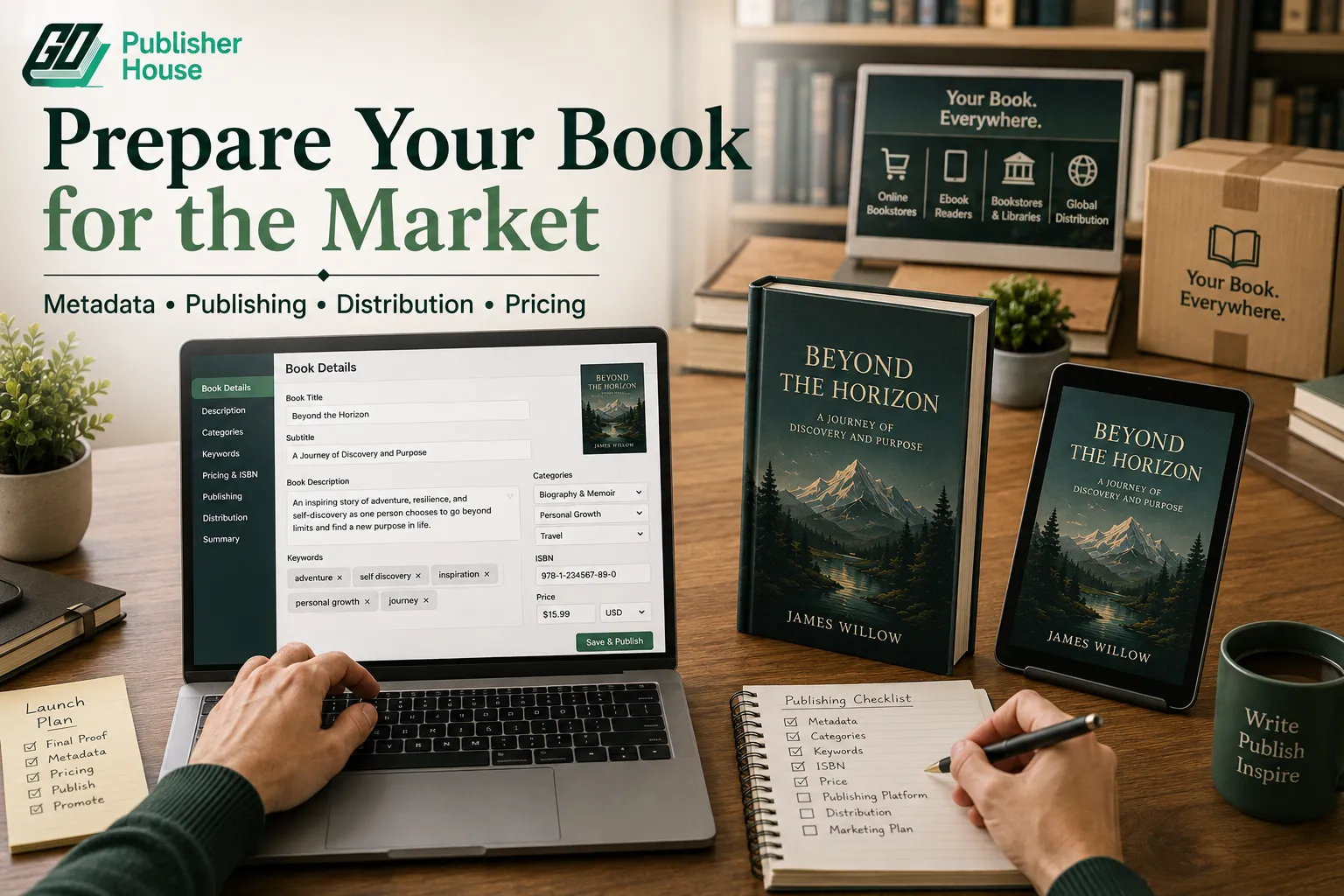
Book metadata is the collection of key information used to identify, describe, categorize, and promote your book. It helps readers understand what your book is about and makes it easier for the right audience to find it. Common metadata includes:
- Title
- Subtitle
- Author Name
- Book Description
- Keywords
- Categories
- ISBN
Each element has a specific purpose. Your title and subtitle tell readers what to expect, while your book description gives them a quick overview of the book and highlights why they should read it. Keywords and categories help retailers place your book in relevant searches and sections. Your ISBN serves as a unique identifier for your book and helps retailers and distributors manage it.
For example, if you are publishing a book about personal finance, relevant keywords could include budgeting, money management, and financial planning. Choosing accurate keywords and categories can help your book appear in front of readers who are already interested in these topics. Your metadata should be accurate and reader focused. Strong metadata improves your book’s discoverability and can increase the chances of reaching potential readers.
Choose a Publishing Platform
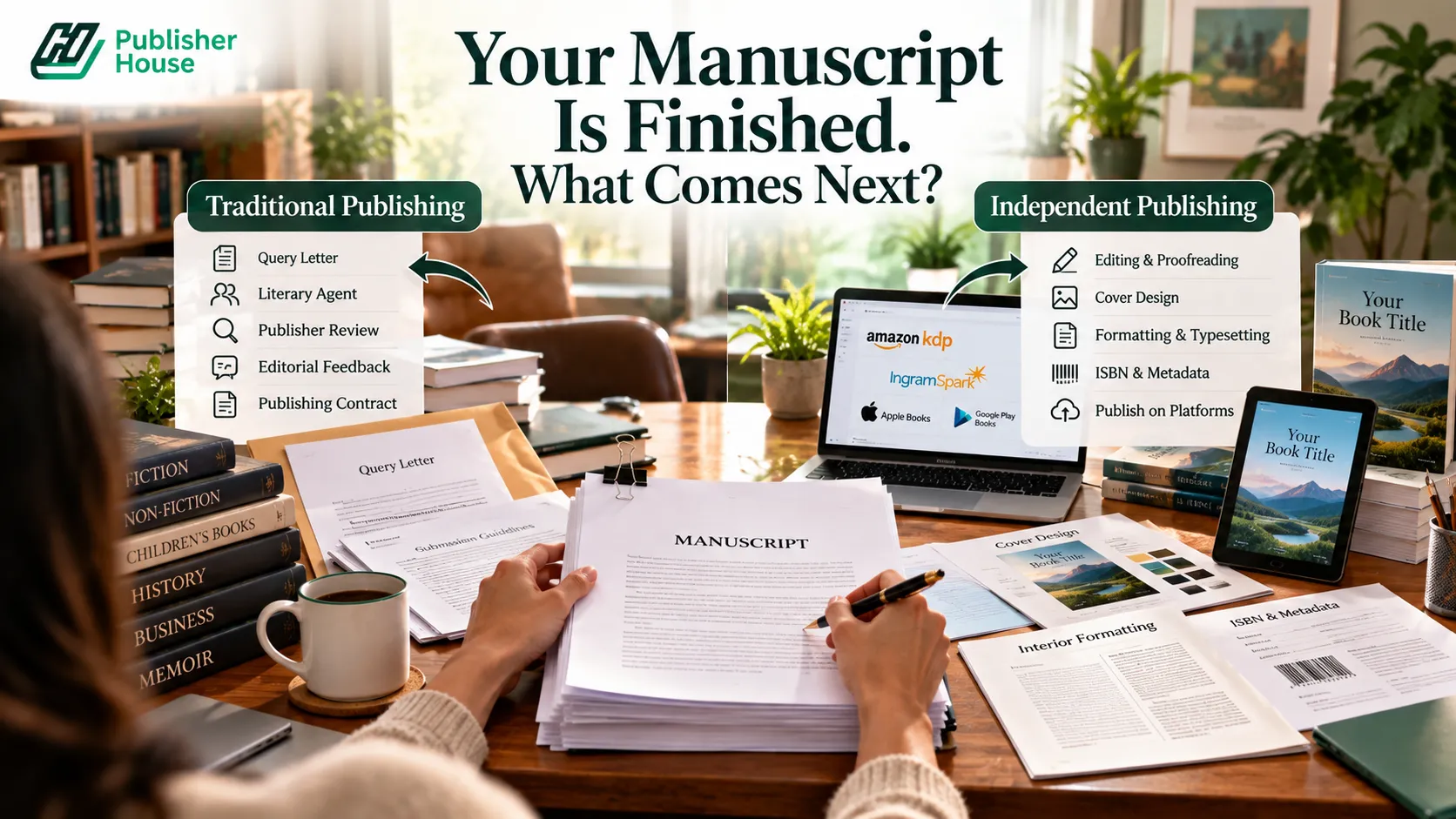
Now you need to decide where and how you want to publish. Self publishing gives you the freedom to publish your book through different platforms like Amazon KDP, Apple Books, Kobo, and Barnes & Noble Press. Each platform has different features, distribution options and requirements. Some are particularly useful for reaching online readers, while others can help with wider print distribution.
If you choose traditional publishing, the process is different. You generally submit your manuscript or book proposal to literary agents or publishers, and the publisher handles many aspects of editing, design, printing, and distribution. Choose a publishing method that fits your book, budget, audience, and goals.
Decide Where You Want to Sell Your Book
Publishing your book and distributing your book are related, but they are not exactly the same thing. You need to decide where readers will be able to purchase your book. You might sell through one major retailer, or you may choose wide distribution, allowing your book to reach multiple online bookstores, physical bookstores, libraries, and other retailers.
For example, an aspiring author may choose to focus primarily on Amazon, while another author may want their book available through several retailers and bookstores. The goal is to make your book available in the places where your target readers are most likely to shop.
Set the Right Price
Setting the right price for your book requires a balance between reader expectations, production costs, and your publishing goals. Start by researching books similar to yours and comparing their prices, formats, length, and overall positioning.
Several factors can influence your pricing, including the genre of your book, its length, format, production costs, competitor pricing, and target audience. Avoid choosing a price simply because it is the cheapest option. A very low price may make your book less profitable, while a price that is too high could discourage potential readers.
Instead, aim for a price that reflects the quality and value of your book while remaining competitive within your category. Set a competitive price that appeals to readers while supporting your earnings and long-term publishing goals.
Build Your Author Platform
Don’t wait until your book is published to start finding readers. An author platform is the audience and online presence you build around yourself and your work. This can include an author website, social media accounts, an email newsletter, and a community of readers. Like you could share:
- Behind the scenes content
- Writing updates
- Helpful information related to your book
- Book announcements
- Short excerpts
- Launch updates
Develop relationships with potential readers before and after your book launch. Building an audience before publication can give you people to reach when your book is ready.
Publish and Launch Your Book
Once everything is ready, upload your final manuscript, cover, metadata, and other required information to your chosen publishing platform. Before officially releasing the book, carefully review the final version. If possible, order a proof copy for a printed book so you can check the physical pages, cover, spacing, images, and formatting.
You can also provide advance copies to selected reviewers or early readers and prepare promotional activities for launch day. Your launch might include social media announcements, email campaigns, interviews, author events, discounts, or other promotional activities. Give your book a strong and organized launch.
Market Your Book Continuously
Publishing your book is not the end of the journey. It is the beginning of your efforts to reach readers. Even after your book is available for purchase, consistent marketing can help increase its visibility, attract new readers, and build long-term interest.
There are many ways to promote a book, including social media marketing, email campaigns, book reviews, paid advertising, author events, interviews, limited-time promotions, and reader communities.
You don’t have to promote your book across every marketing channel. Instead, focus on the platforms and strategies that are most relevant to your target audience. For example, a business author may benefit from promoting their book on LinkedIn and within professional communities, while a young adult fiction author may focus on platforms popular with younger readers.
Keep track of which strategies generate the most engagement, sales, and reader interest. Use these insights to refine your marketing efforts and continue promoting your book after its initial launch.
What are the Differences Between Self Publishing and Traditional Publishing?
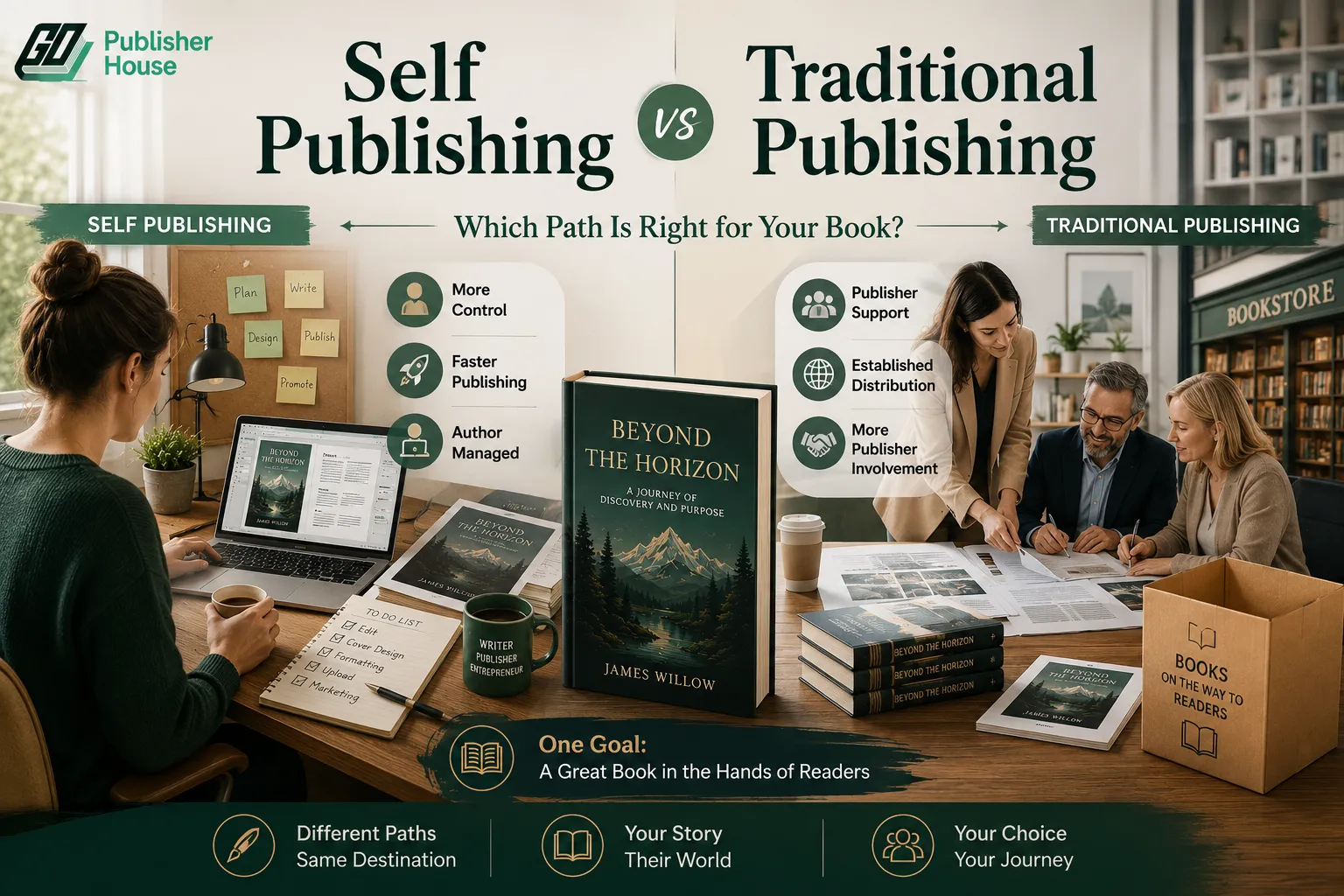
Both self-publishing and traditional publishing offer different benefits, so understanding your options is important when asking, how do you publish a book? Self publishing provides more control and flexibility, while traditional publishing offers professional support and established distribution. Your choice should depend on your goals, budget, timeline, and preferred level of involvement.
| Factor | Self Publishing | Traditional Publishing |
|---|---|---|
| Control | More creative and publishing control | Publisher has more control |
| Costs | Author usually covers publishing expenses | Publisher generally covers costs |
| Publishing Time | Usually faster | Often takes longer |
| Marketing | Mostly handled by the author | Publisher may provide support |
| Distribution | Author arranges distribution | Publisher provides established networks |
| Creative Freedom | Greater flexibility | More publisher involvement |
| Best For | Authors seeking independence | Authors seeking professional support |
How Can Go Publisher House Help You?
Got a story in your head but don’t know how to turn it into a published book? That’s where Go Publisher House comes in! From book editing services to complete book publishing services, we help you through every stage. Whether it’s editing, professional cover design, formatting, publishing, or marketing we can help.
From new writers to experienced authors, we make publishing simple and professional, so you can focus on bringing your story to life. Our goal is to make your book stand out and reach the right readers. Your words. Your story. Your book. Let’s bring it to life with Go Publisher House!
Conclusion
Still thinking about how to get my book published? The process becomes easier when you take it step by step, from writing and editing your manuscript to designing, publishing, and marketing your book. With the right guidance and professional support, you can confidently turn your manuscript into a polished, reader ready book.
Have a story the world needs to read? Contact Go Publisher House today for professional book publishing services and take the first step toward becoming a published author. Your story deserves a platform, so let’s make your publishing dream a reality!
Frequently Asked Questions
How can I publish a book for the first time?
To publish a book, you need to complete and edit your manuscript, create a professional cover, format the book, prepare metadata, choose between self-publishing or traditional publishing, set a price, publish, and market your book.
Which publishing option is best for your book?
It depends on your goals. Self publishing gives you more control and flexibility, while traditional publishing can provide professional support and established distribution. Consider your budget, timeline, and preferred level of control before deciding.
What’s the cost of publishing a book?
The cost varies depending on the services you need, such as editing, proofreading, cover design, formatting, publishing, printing, and marketing. Self-publishing generally requires the author to cover these expenses, while traditional publishers typically cover most publishing costs.
Is professional editing necessary before publishing a book?
Yes. Professional editing can improve your book’s quality, readability, structure, grammar, and consistency. Depending on your manuscript, you may need developmental editing, copy editing, or proofreading.
How important is a book cover?
A professional book cover is extremely important because it creates the reader’s first impression. Your cover should look professional and match the expectations of your book’s genre and target audience.