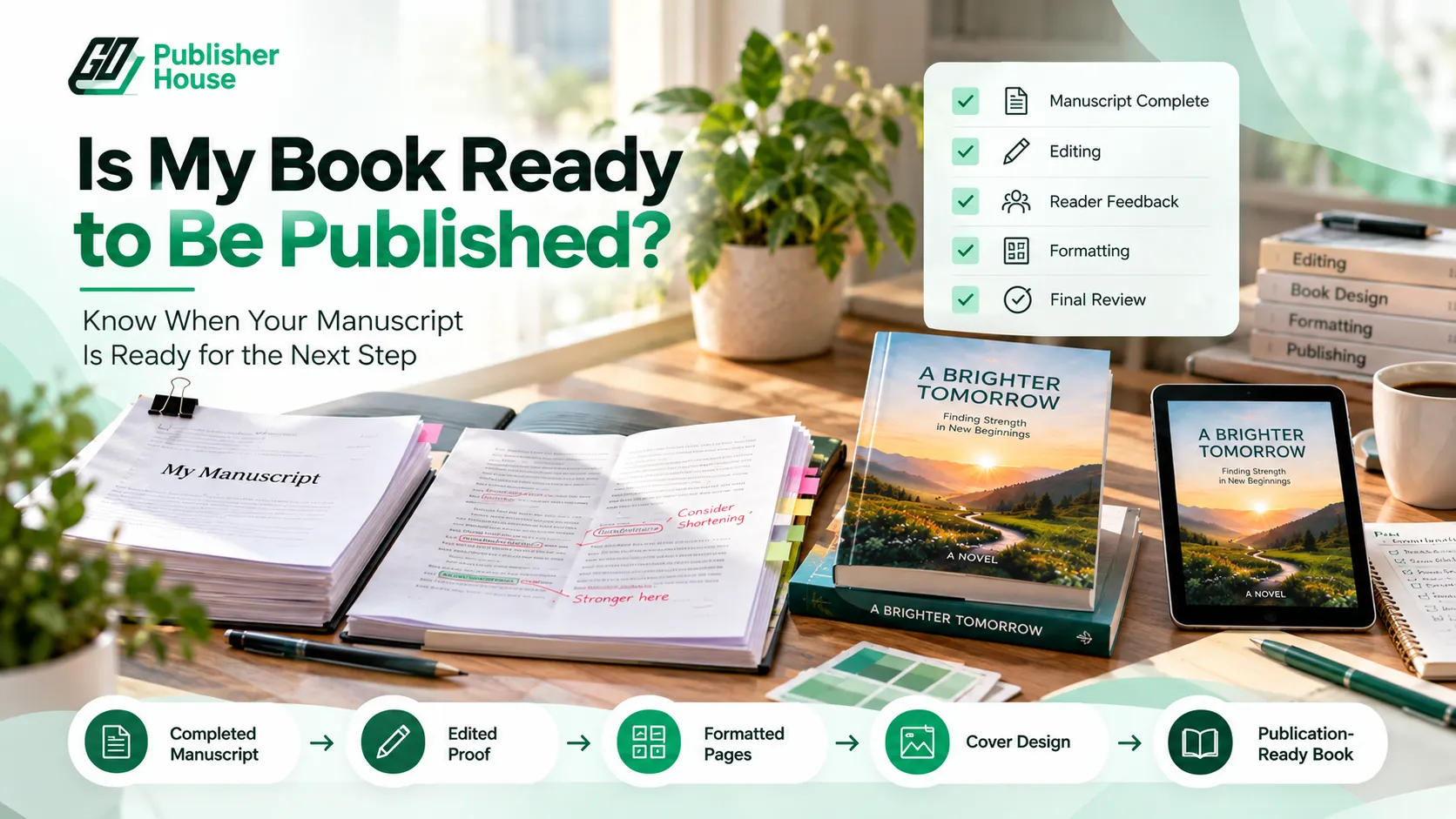
You have written the final chapter, typed The End, and finally have a complete manuscript in your hands. But is your book truly ready for readers? So how to prepare a book for publishing? It takes more than a finished manuscript to turn your story into a professional publication. Editing, formatting, cover design, publishing details, and final file preparation all play an important role in getting your book ready for print or digital platforms.
Whether you are approaching a publisher or planning to self-publish, understanding each step can save you time, avoid costly mistakes, and give your book the polished finish it deserves. In this guide, we will walk you through the essential steps to prepare your book for publishing with confidence.
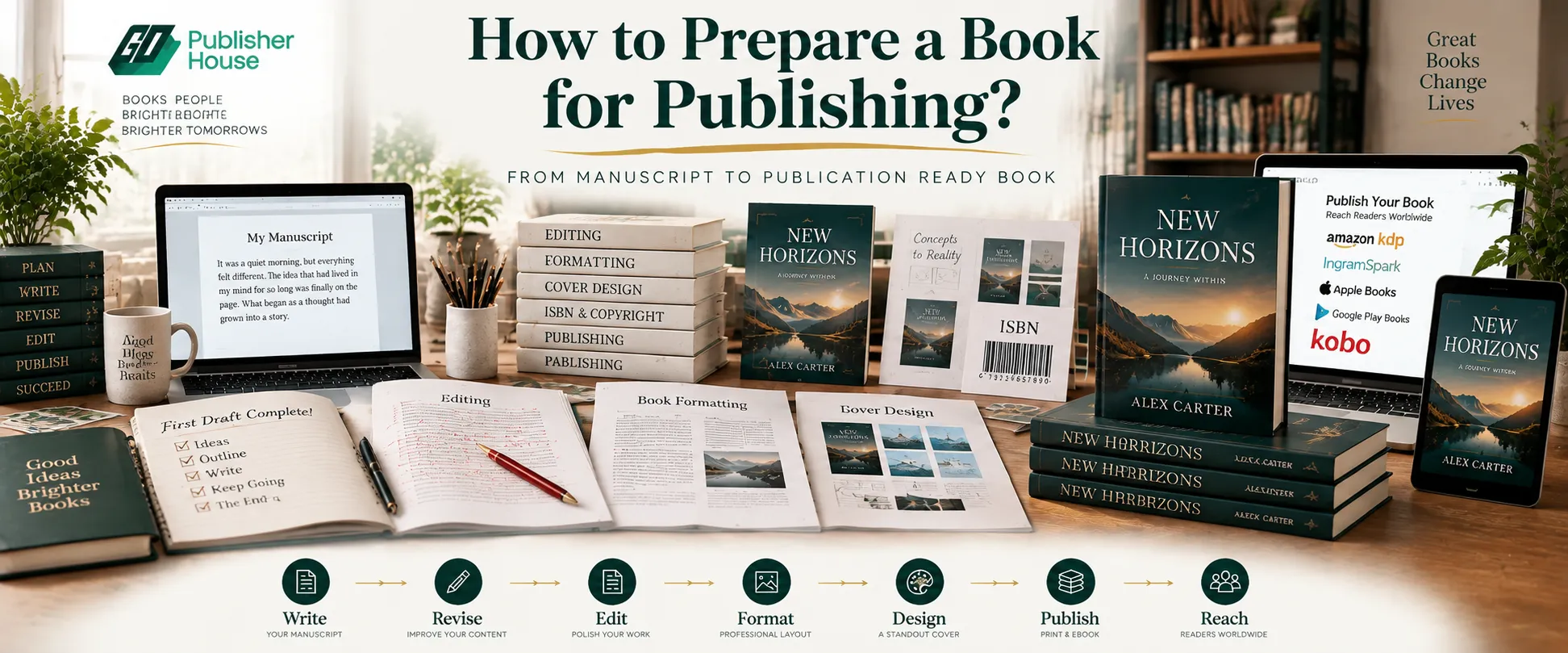
How to Prepare a Book for Publishing?
Thinking about how to publish a book? Completing your manuscript is a big milestone, but there’s still work to do before your book is ready for readers. Before your book reaches readers, you need to make sure the content is polished, the pages are professionally formatted, the cover is ready, and all publishing requirements are complete.
Whether you choose traditional publishing or self-publishing, following a clear process can make the journey much easier. Here are the key steps to take your book from a finished manuscript to a publication-ready book.
Finish Your First Draft
Start by getting your ideas onto the page. Don’t get stuck trying to perfect every line as you write. Your first draft is about completing the story or sharing your ideas. Set realistic writing goals, create an outline if helpful, and keep writing until you have a complete manuscript.
Revise and Rewrite Your Manuscript
Once your first draft is finished, take a short break before reviewing it. Then read your manuscript with fresh eyes. Several rounds of revision may be needed before your manuscript is ready for professional editing. Look for:
- Gaps in the story or information
- Weak sections or unnecessary content
- Repetition
- Poor transitions
- Problems with structure, pacing, or clarity
- Inconsistent characters, facts, or ideas
Get Professional Editing
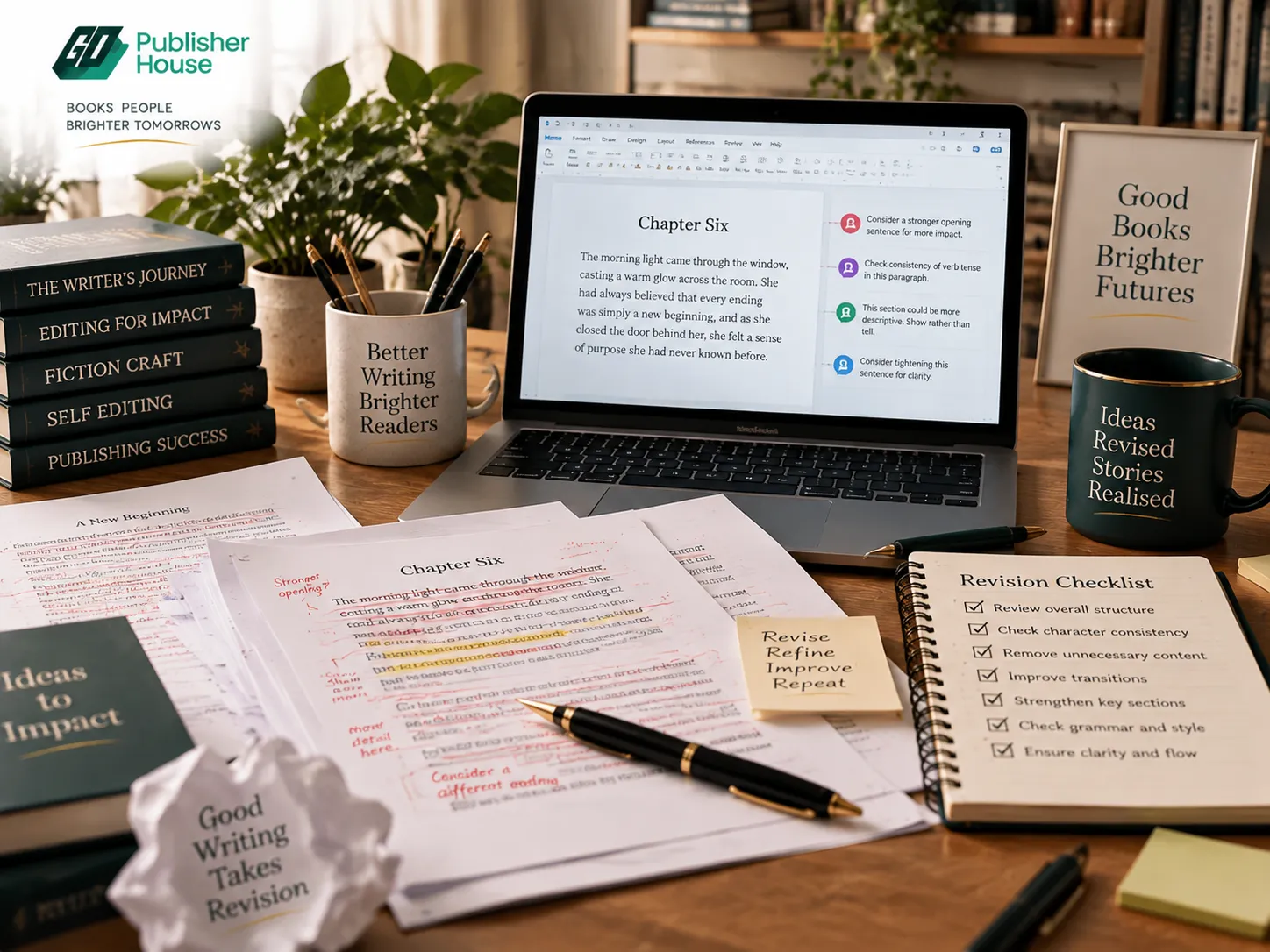
Editing can make a major difference in the quality of your book. A professional editor can identify problems that are difficult to notice on your own. Depending on your book, you may need:
- Developmental Editing: Improves the overall structure, content, characters, pacing, and organization.
- Copyediting: Checks grammar, spelling, sentence structure, consistency, and style.
- Proofreading: Finds remaining typos, punctuation mistakes, formatting issues, and other small errors before publication.
Get Feedback From Others
Before publishing, let a few trusted readers review your manuscript. Beta readers, writing groups, or knowledgeable peers can provide useful feedback. Ask them specific questions rather than simply asking, Did you like it? Their feedback can help you discover confusing sections, missing information, or areas that need improvement. Remember, useful criticism is not a bad thing; it helps make your book stronger.
Make the Final Changes
Use the feedback from your editor and readers to make your final revisions. Avoid making random changes at this stage. Focus on fixing the issues that genuinely improve the book. Once you are satisfied with the content, prepare the final version of your manuscript.
Format Your Book
Good formatting makes your book comfortable to read and gives it a professional appearance. Always follow the technical requirements of your chosen publisher or publishing platform. For an eBook, make sure the layout works correctly across different devices and screen sizes. And for a print book, consider:
- Page size and margins
- Fonts and paragraph spacing
- Chapter headings
- Page numbers
- Headers and footers
- Images, tables, and captions
- Front and back matter
Design an Attractive Book Cover
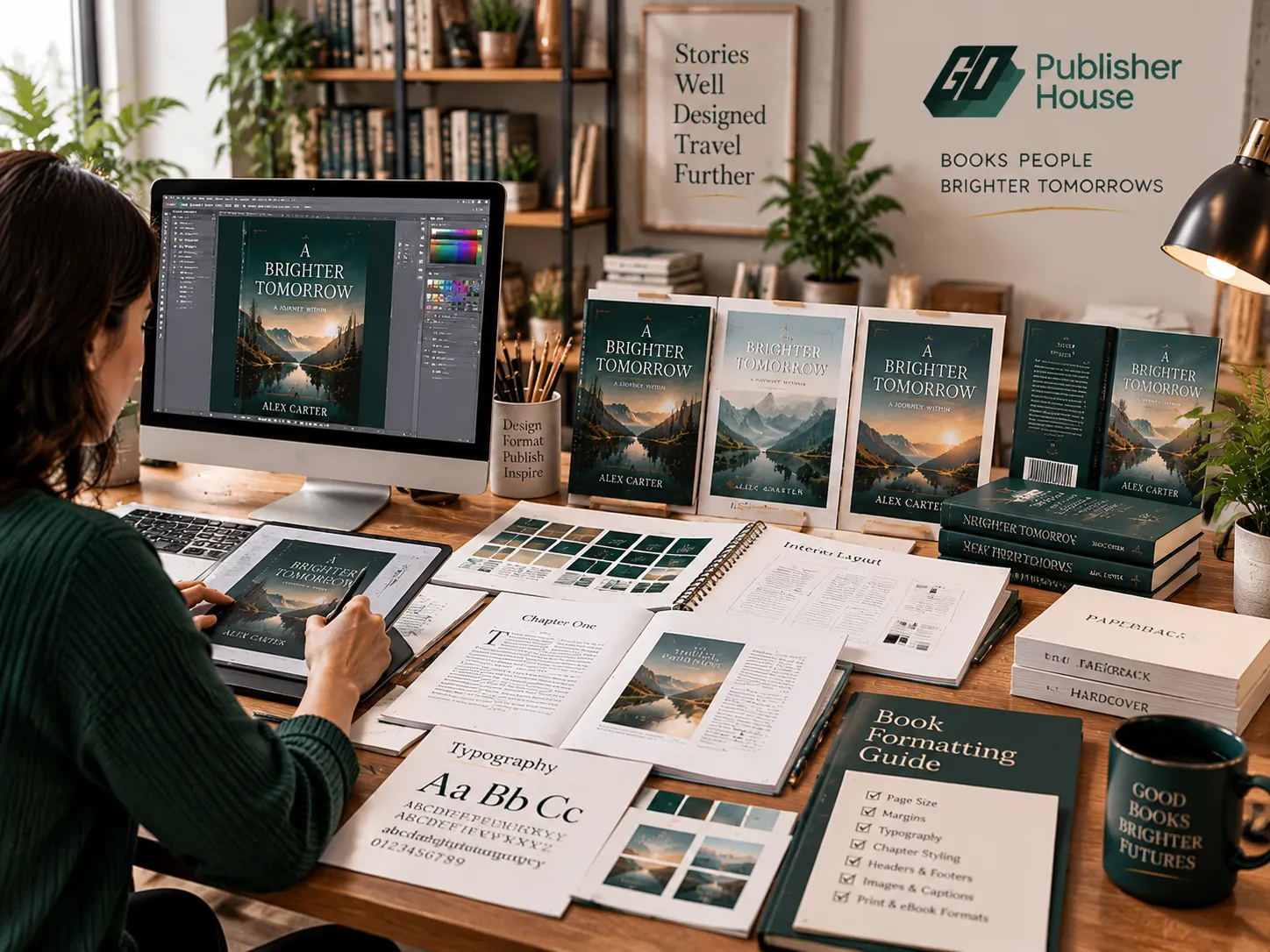
Before readers discover your story, they’ll likely notice your cover first. It should match the genre and tone of your book while clearly displaying the title and author’s name. For print books, you may also need a spine, back cover, book description, and barcode. A professional cover designer can help ensure that your cover looks polished and meets the required specifications.
Prepare the Front and Back Matter
Your book may need a few additional sections before and after the main content. Front matter typically appears at the beginning of the book and can include the title page, copyright page, dedication, table of contents, preface, or introduction. Back matter appears after the main content and may include acknowledgments, an author biography, references or bibliography, a glossary, information about your other books, or your website and contact details. Include only the sections that are relevant to your book and its readers.
Prepare Your Book Details
Before publishing, make sure you have all the important information about your book ready. This includes the book title and subtitle, author name, short and long book descriptions, author bio, categories, keywords, pricing information, and ISBN where required. Preparing these details in advance makes it easier to create your book listing, submit your files, and complete the publishing process without unnecessary delays.
Get an ISBN and Protect Your Work
An International Standard Book Number (ISBN) identifies a specific edition and format of your book. Whether you need one and how you obtain it depends on your country and publishing route. You should also understand your copyright and make sure you have permission for any third party text, images, quotes, or other material included in your book.
Choose Your Publishing Route
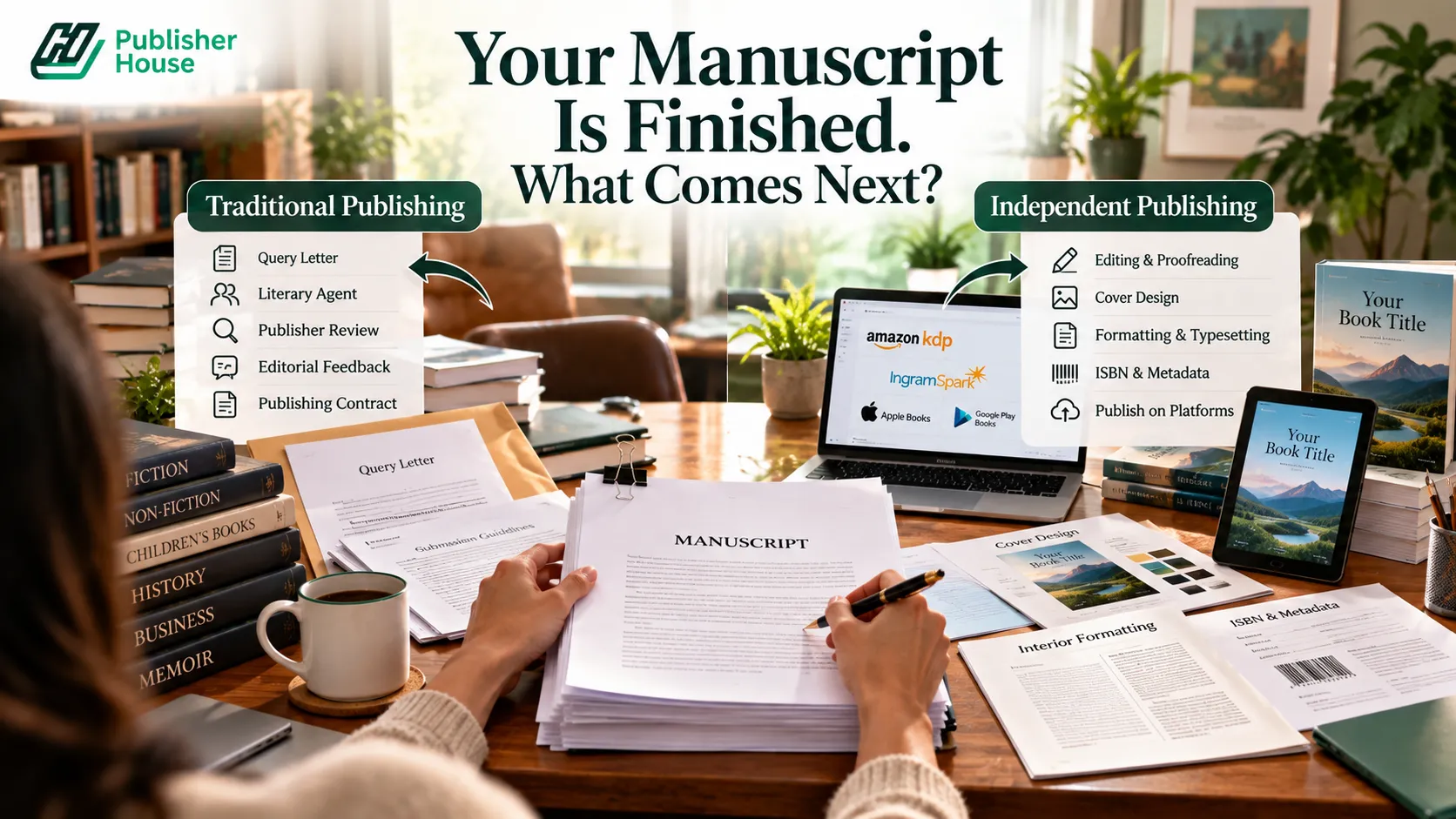
Before you move forward, it’s important to understand how book publishing works and choose the publishing route that best fits your goals. Generally, authors have two main options: traditional publishing or self-publishing. Each approach has a different process, level of control, cost, and timeline.
Traditional Publishing
You submit your book or proposal to literary agents or publishers. If accepted, the publisher may handle editing, design, printing, distribution, and other parts of the publishing process.
Self Publishing
You manage the publishing process yourself or hire professionals to help. This gives you greater control over your book but also means you are responsible for areas such as editing, design, distribution, and marketing. Choose the option that best fits your goals, budget, timeline, and desired level of control.
Choose Your Publishing Platform
If you decide to self-publish, choose platforms that fit your book and target audience. You may publish in print, as an eBook, or both. Before uploading your files, check the platform’s latest requirements for file formats, dimensions, images, covers, metadata, and pricing.
Prepare and Check the Final Files
Prepare your final manuscript or eBook, cover, book description, author information, ISBN, and other publishing details. Before submitting, carefully check everything for errors and formatting issues. If possible, review a proof copy or digital preview to catch any final mistakes before publication.
Keep Writing and Improving
Your first book is an important milestone, but your publishing journey doesn’t have to end there. Learn from reader feedback, understand what works, continue improving your writing, and start planning your next project.
What to Expect After Your Book Is Accepted?
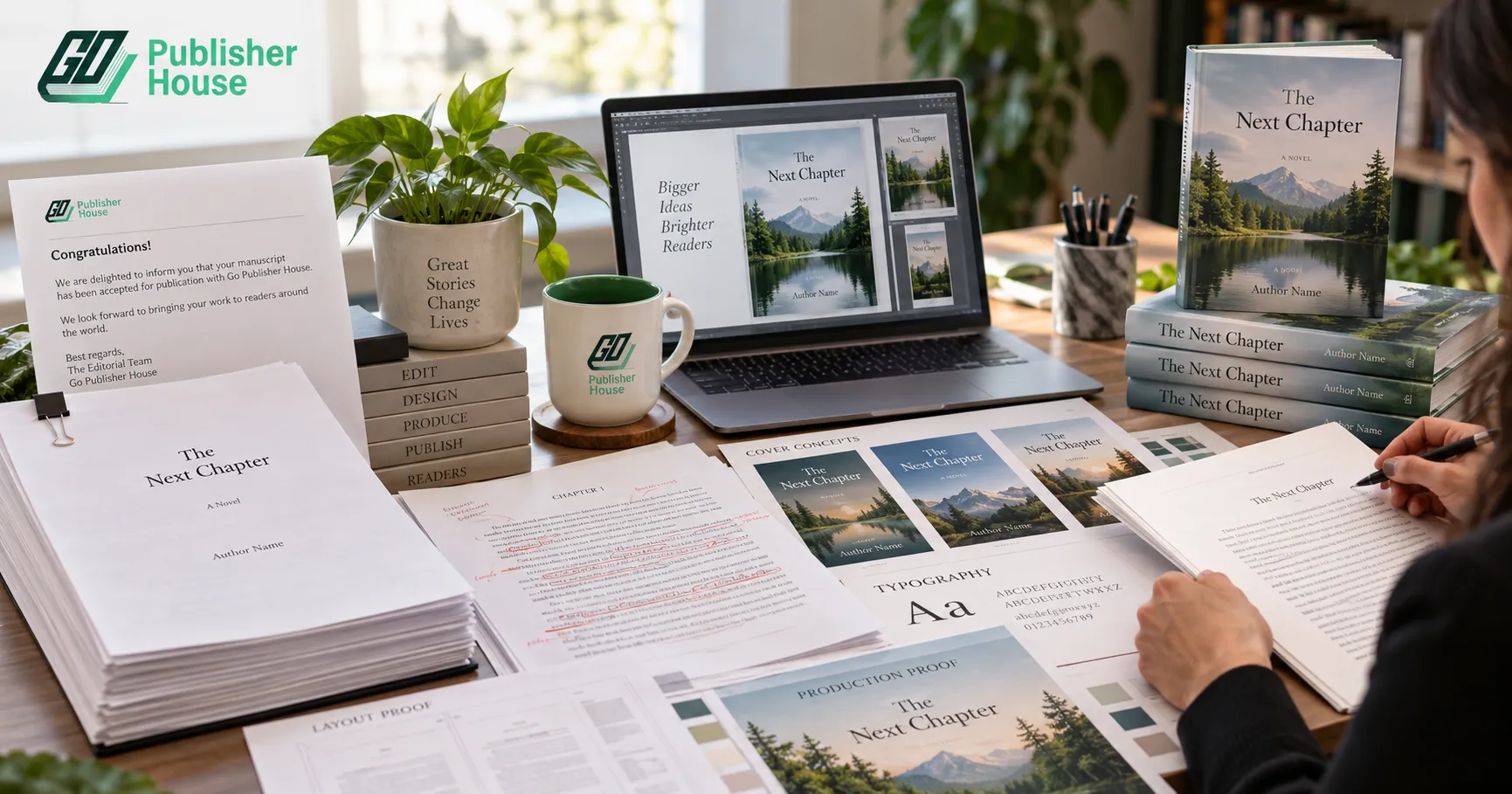
Getting your book accepted is an exciting milestone, but it’s only the beginning of your publishing journey. If you are wondering what happens when a publisher accepts your book, the next steps typically include editing, proofreading, formatting, cover design, and final production.
You may also collaborate with the publisher on revisions, pricing, marketing strategies, and the publication date. Although the process can take time and involve several stages, seeing your manuscript transform into a professionally published book makes it all worthwhile. Stay involved, communicate clearly, and get ready to share your story with readers!
How Can Go Publisher House Help You?
Turning a manuscript into a published book can feel overwhelming, but you don’t have to navigate the process alone. Go Publisher House provides the professional support you need to get a book ready for publishing and bring your vision to life.
From editing and proofreading to formatting, cover design, publishing, distribution, and promotion, our team guides you through every important stage. Whether you are a first time author or an experienced writer, we make the publishing journey simpler, smoother, and more rewarding.
Conclusion
Knowing How to Prepare a Book for Publishing can make the journey from a finished manuscript to a published book much easier. By focusing on editing, formatting, cover design, publishing requirements, and final checks, you can ensure your book is professional and ready for readers. Have a manuscript ready to take the next step? Connect with Go Publisher House and let’s turn your words into a book readers can discover.
Frequently Asked Questions
What to do before publishing a book?
Before publishing a book, finish your manuscript, edit and proofread it, format the interior, create a professional cover, prepare your book details and ISBN if required, and review a final proof copy. Choosing the right publishing route and platform is also important before making your book available to readers.
How should I format my book for publishing?
Formatting depends on whether you are publishing a print book or an eBook. You should follow your chosen publisher’s or platform’s requirements for page size, margins, fonts, spacing, images, and other layout elements.
What is the book publishing checklist?
A book publishing checklist is a step-by-step guide that helps authors make sure everything is completed before their book reaches readers. The key steps include writing and revising the manuscript, editing and proofreading, formatting the book, designing the cover, preparing book details, obtaining an ISBN if required, choosing a publisher or platform, reviewing a proof copy, publishing, and promoting the book.
Is ISBN required to publish a book?
An ISBN identifies a specific edition and format of a book. Whether you need one depends on your country, publishing route, and distribution plans.
Should I design my book cover before publishing?
Yes. A professional cover helps create a strong first impression and should meet the technical requirements of your chosen publishing format or platform.