What Do You Need to Publish a Book? Publishing a book is about more than simply finishing your manuscript; it’s about preparing your story for the world. From polishing your writing and designing an eye-catching cover to choosing the right publishing route, getting an ISBN, formatting your book, and reaching your readers, each step plays an important role.
Whether you are a first-time author or ready to finally share a book you have been working on for years, knowing what you need can make the publishing process much smoother. Let’s explore the essential steps you need to turn your manuscript into a professionally published book.
What Do You Need to Publish a Book?
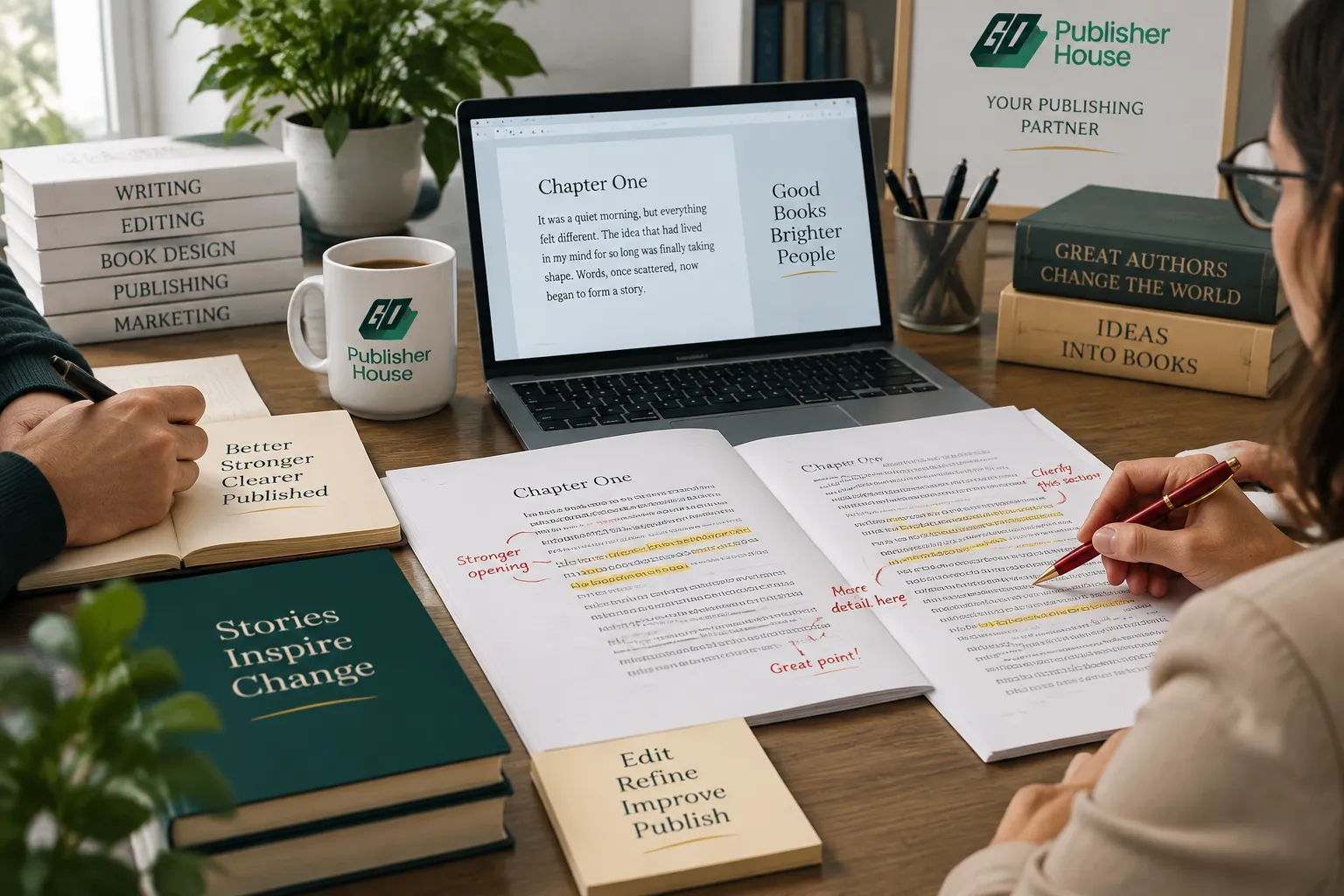
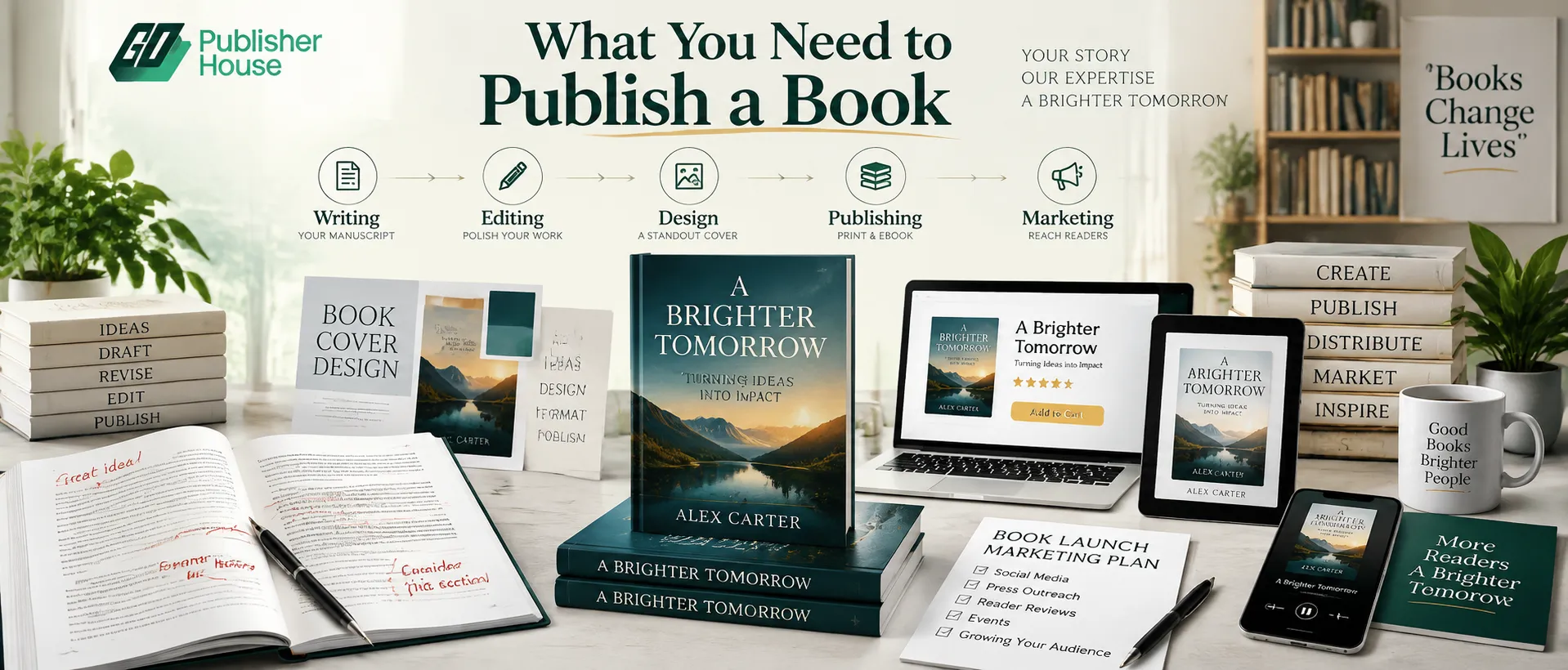
Want to know how to prepare a book for publishing? Whether you choose traditional publishing or self-publishing, your book needs to go through several important stages before it is ready for readers. Every writer must know the book publishing requirements. These include writing and revising the manuscript, professional editing, cover design, formatting, ISBN and copyright requirements, publishing, distribution, and marketing.
Here is a step-by-step overview of what you need to publish a book professionally.
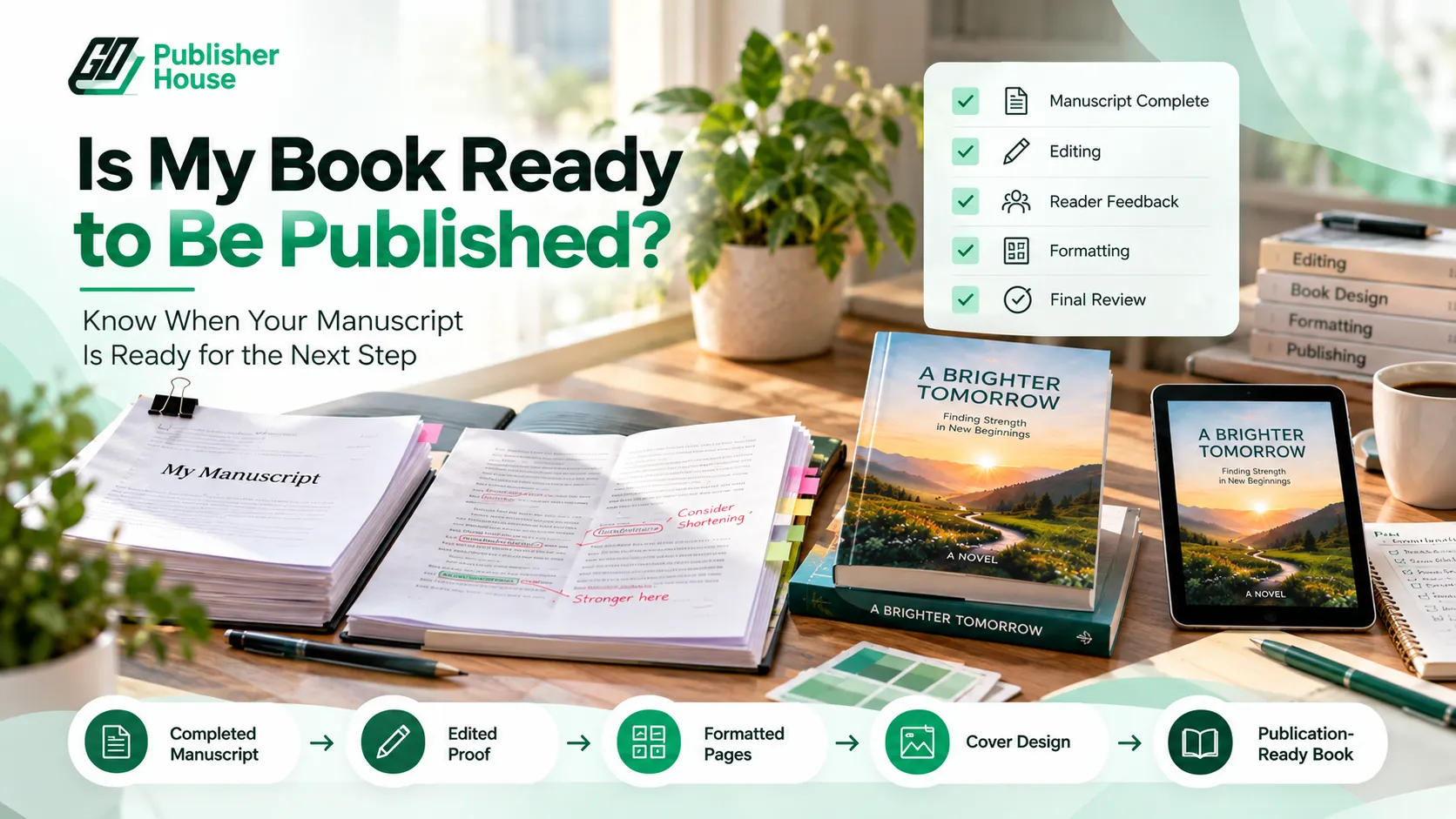
A Completed Manuscript
The first and most important requirement is a finished manuscript. Before thinking about publishing, make sure your book is complete and that the story, structure, characters, arguments, or ideas are fully developed.
Do not rush to publish your first draft. Once you finish writing, take some time away from the manuscript and then return to it with fresh eyes. Read the entire book again and look for plot holes, unnecessary sections, weak passages, repetition, inconsistencies, and areas that need further development.
You should also have a clear understanding of your target audience and genre. Knowing whether your book is a novel, poetry collection, memoir, academic work, children’s book, or another type of publication will help you make better decisions about editing, design, publishing, and marketing.
Rewriting and Self Editing
There is rarely a chance that the first draft is ready for publication. Rewriting is an essential part of the process. During self-editing, review your manuscript for grammar, spelling mistakes, repetition, and unnecessary content. You need to check the overall readability and flow.
You can use writing and AI-based editing tools for basic feedback, but these should not completely replace human judgment. Automated tools may identify grammatical problems, but they cannot always understand the author’s intended voice or emotional impact.
Professional Editing
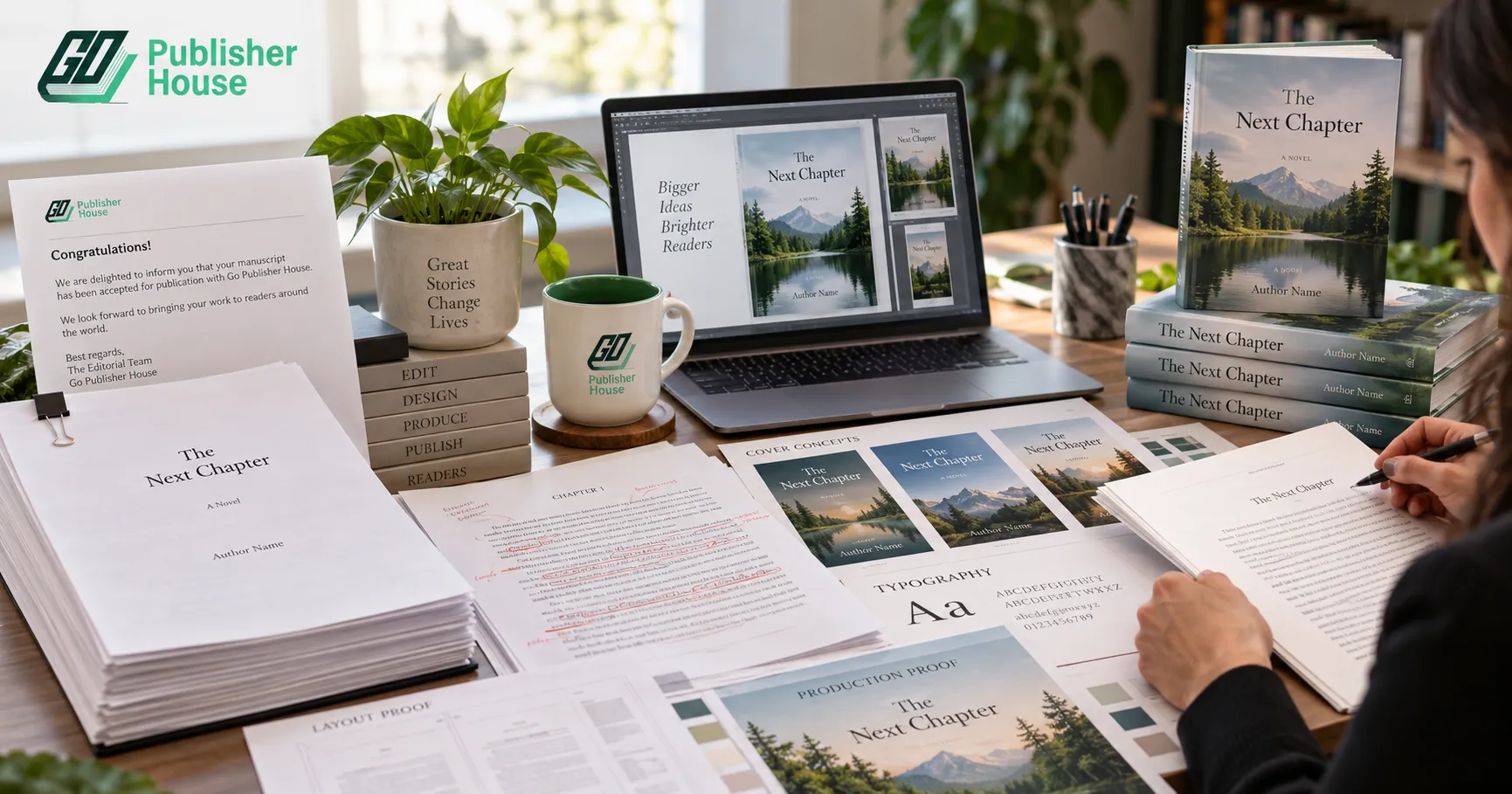
After completing your own revisions, consider working with a professional editor. Professional book editing services can significantly improve the quality and readability of a book before publication. Not every book requires the same level of editing, but professional editorial feedback can help identify problems that an author may overlook because they are too familiar with their own work.
Beta Readers and Peer Feedback
Before finalizing your manuscript, it can be helpful to give it to a small group of trusted beta readers. Beta readers read the book from a reader’s perspective and can tell you whether the story is engaging, confusing, too slow, predictable, or difficult to follow. Their feedback can be particularly useful for fiction, memoirs, and other reader-focused books.
Choose readers who will provide honest and constructive feedback rather than simply telling you that they enjoyed the book. After reviewing their comments, make any necessary revisions before moving to the final editing stage.
Professional Book Cover Design
A book cover is one of the first things potential readers see, so it plays an important role in attracting attention. Professional book cover design services help create a cover that reflects the book’s genre, subject, tone, and target audience. A romance novel, business book, children’s book, and thriller will generally require very different visual approaches.
For a print book, the complete cover may include:
- Front cover
- Spine
- Back cover
- Title and subtitle
- Author name
- Back cover description or blurb
- Publisher or imprint information, where applicable
The cover should also work at a small size for online bookstores, where readers may initially see it as a thumbnail.
Book Formatting and Interior Design
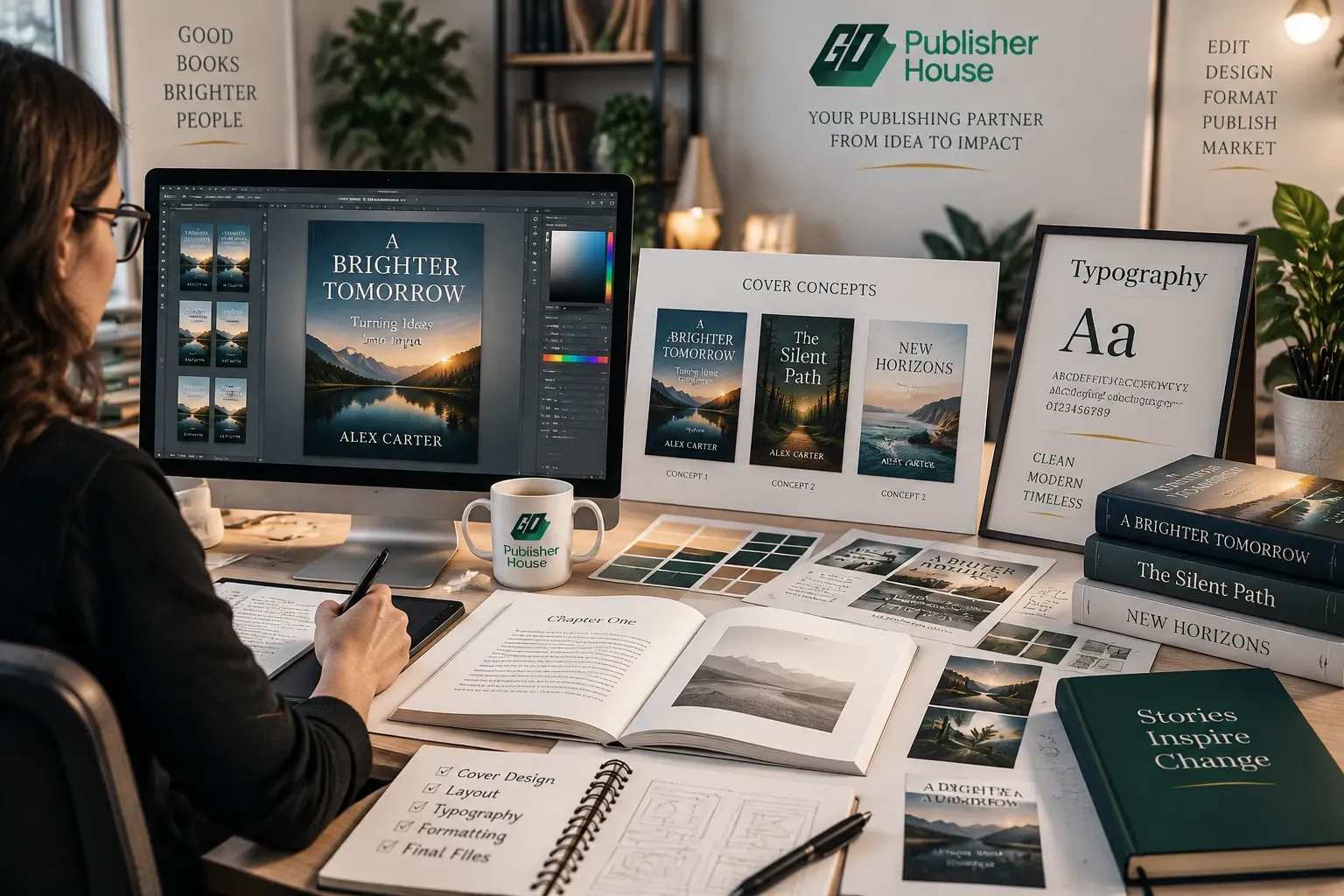
Once the manuscript has been edited and the cover is ready, the book needs to be professionally formatted. You generally need separate formatting for print and eBook editions. Professional book formatting services help ensure your book has the correct structure, layout, and presentation for different formats. Print formatting involves decisions such as trim size, margins, images, and illustrations, if applicable.
An eBook requires a different structure because text needs to adapt to different screen sizes and reading devices. Authors can hire a professional formatter or use book formatting software and templates. Whichever approach you choose, the final files should be checked carefully before publication.
ISBN
An ISBN is a unique number used to identify and track books and other qualifying publications worldwide. ISBN requirements and procedures vary by country and publishing method. Different editions or formats of a book may require separate ISBNs for example, paperback and eBook editions. Authors should confirm the current requirements with the official ISBN authority before applying.
Perhaps one of the biggest benefits of working with a publisher is having a team manage the many moving parts of publication. The author may be the person who writes the book, but publishing involves many specialists working behind the scenes.
The publisher coordinates these teams and keeps the project moving from manuscript development to final publication. This allows authors to focus more on their writing while experienced professionals handle areas that require specialized knowledge.
Copyright Registration
Copyright generally protects an author’s original literary work from unauthorized use. Copyright registration can provide useful evidence of ownership and may make it easier to address disputes involving unauthorized use or reproduction.
Authors should also make sure that any material they did not create themselves, such as photographs, illustrations, quotations, or other copyrighted content, is properly licensed or used with appropriate permission.
Choose a Publishing Route
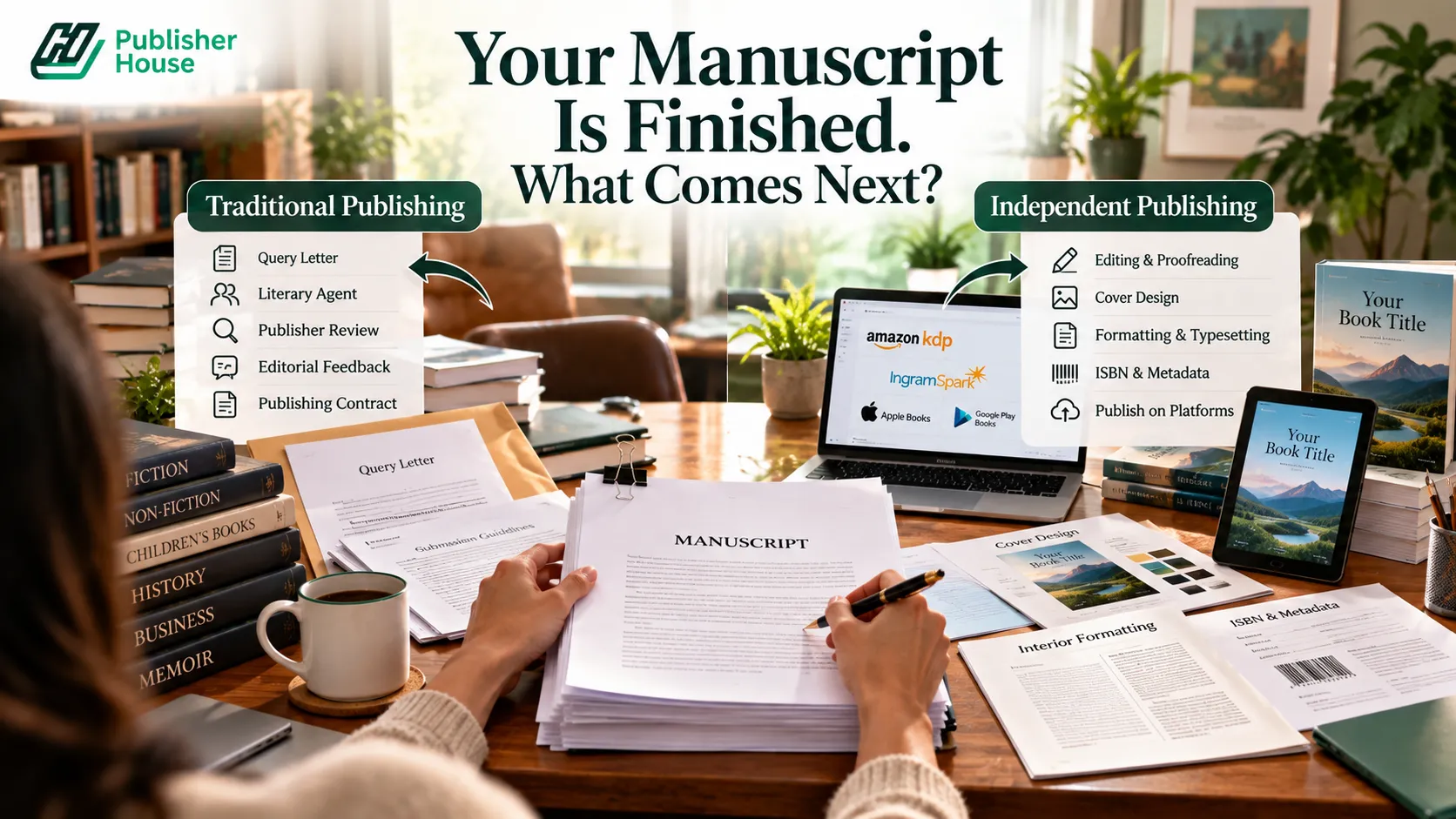
Now you need to decide how to publish a book. Your two main options include traditional publishing and self-publishing. With traditional publishing, you may wonder what happens when a publisher accepts your book. Typically, the publisher will guide you through the next steps, including editing, cover design, formatting, printing, distribution, and sometimes marketing. Before submitting your manuscript, research publishers that are a good fit for your book and carefully review the publishing contract, especially the rights, royalties, payment terms, and responsibilities.
Self publishing gives you greater control over your book’s editing, design, pricing, marketing, and distribution. However, you are also responsible for managing or paying for these services yourself.
Publishing Platform and Printing
Once your book is properly formatted, choose the publishing method and platform that’s right for your book. You can work with book publishers in England for traditional publishing or use self-publishing platforms such as Amazon KDP for wider digital and print distribution.
For physical books, you can choose bulk printing for larger quantities or print-on-demand to print copies as they are ordered. Before committing to a large print run, always review a proof copy to check the cover, layout, images, fonts, and overall print quality.
Book Description and Metadata
Before listing your book for sale, prepare the information readers and bookstores will use to discover it. This can include:
- Book title
- Subtitle
- Author name
- Book description or blurb
- Author biography
- Genre
- Categories
- Keywords
- ISBN
- Edition information
- Price
- Publisher or imprint information
Your book description should clearly communicate what the book is about and why a reader should be interested in it. Keywords and categories are particularly important for online publishing because they can help readers discover your book through bookstore searches.
Distribution and Sales
If you have got your book published, don’t think you are done. It is just the start. The next thing you require is a proper, clear plan for how readers can find and buy it. Depending on your publishing model, distribution may include:
- Online bookstores
- Local bookstores
- Libraries
- Author websites
- Publisher websites
- Social media shops
- Direct sales
- International marketplaces
Marketing and Promotion
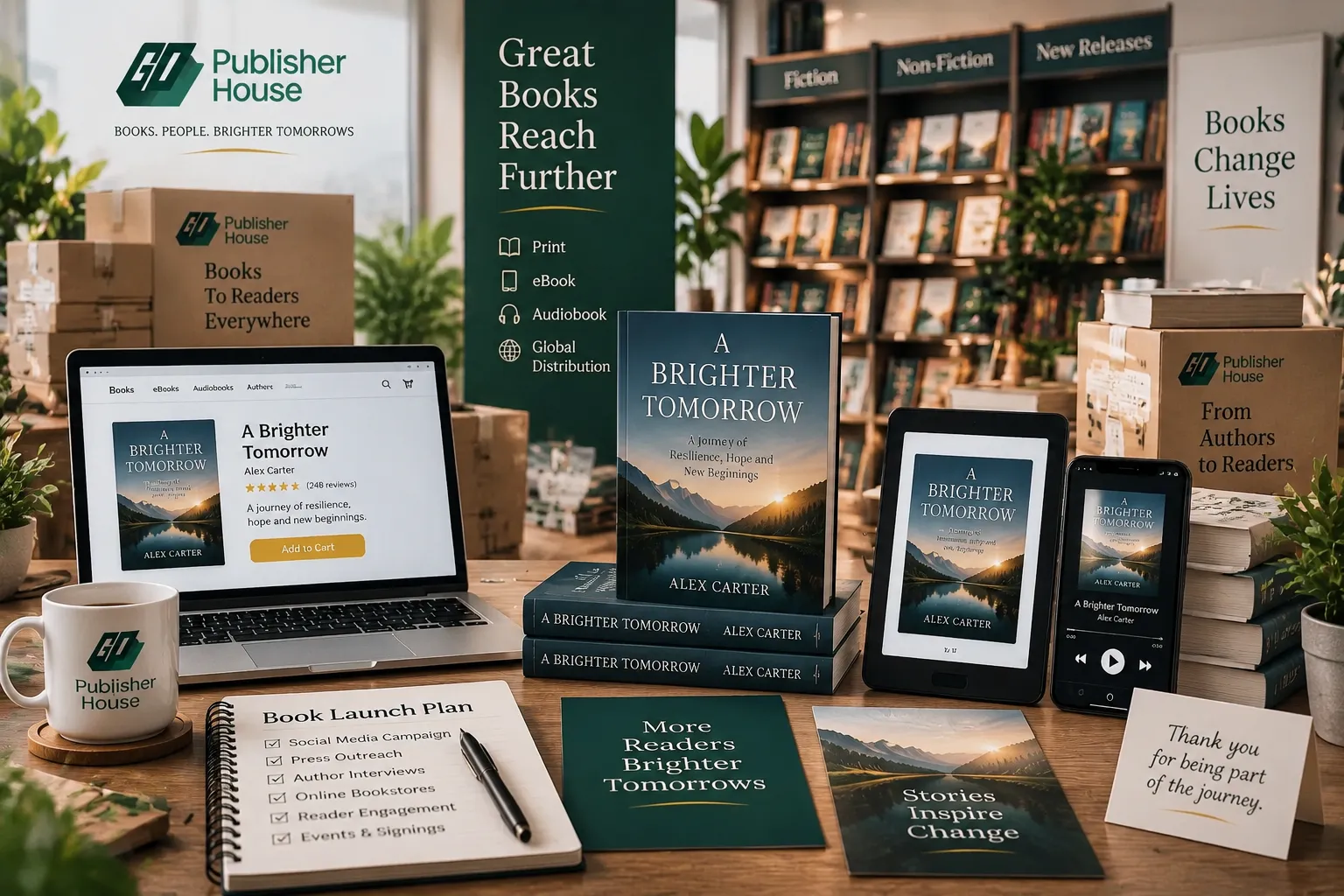
A published book does not automatically find readers. Marketing is an important part of building awareness and generating sales. Before launch, create a basic marketing plan that identifies your target readers and the channels you will use to reach them. Professional book marketing services can help authors promote their books through strategies such as social media content, author website promotion, email marketing, collaborations with influencers or other authors, and much more.
Budget and Timeline
Before starting the publishing process, establish a realistic budget and timeline. Your publishing costs may include editing and proofreading, cover design, formatting, ISBN and registration requirements, printing, distribution, and marketing. Some publishing routes may cover certain costs, while self-publishing generally requires the author to manage them.
Your timeline will also depend on the publishing route. Self-publishing can be considerably faster because the author controls the schedule, while traditional publishing may take substantially longer because of the submission, acquisition, editing, production, and distribution stages.
Final Quality Check
Before publishing, complete a final quality check to make sure everything is ready. Make sure the formatting is consistent, there are no errors is digital and print files, and the ISBN and publishing information are correct. Check that the book description, metadata, and price are correct, and review the final printed proof to ensure it looks professional. Finally, confirm that your distribution channels are ready and that all necessary marketing materials have been prepared for launch.
What can Go Publisher House do for You?
Want to tell a story but not sure what is required to publish a book? Go Publisher House can help turn your manuscript into a professionally published book. From editing and proofreading to cover design, formatting, printing, publishing, and distribution, we support you throughout the publishing journey. Our goal is to make publishing simpler, smoother, and more accessible, so you can focus on sharing your story with the world.
Conclusion
Publishing a book may seem overwhelming at first, but knowing what do you need to publish a book makes the journey much easier to navigate. From completing and refining your manuscript to editing, designing, formatting, securing the right publishing details, and reaching your readers, every step brings your book closer to publication. With the right planning and professional support, you can turn your manuscript into a polished book that is ready for readers.
Ready to bring your story to life? Let Go Publisher House help you turn your manuscript into a professionally published book. Get in touch today and take the first step if you want to become a published author!
Frequently Asked Questions
What is needed to publish a book?
To publish a book, you generally need a completed and edited manuscript, a professional cover, properly formatted print or eBook files, an ISBN where required, publishing details, distribution channels, and a basic marketing plan.
Should I choose traditional publishing or self publishing?
Traditional publishing can provide professional publishing support, while self publishing gives authors greater control over the process. The best choice depends on your goals, budget, timeline, and preferences.
How much cost is required to publish a book?
The cost depends on the publishing method and the services you choose. Expenses may include editing, cover design, formatting, printing, ISBN related requirements, distribution, and marketing.
Do you need an ISBN for book publishing?
ISBN requirements vary by country, format, and publishing method. If an ISBN is required for your edition, you should obtain one through the appropriate national ISBN agency.
What do I need to publish a book for the first time?
First time authors should focus on completing their manuscript, getting professional editing and proofreading, creating a suitable cover, formatting the book, choosing a publishing route, and preparing it for distribution and promotion.
Should you copyright your book before publishing?
Your original written work is generally protected by copyright from the moment you create it. However, registration may provide additional evidence of ownership in some countries.