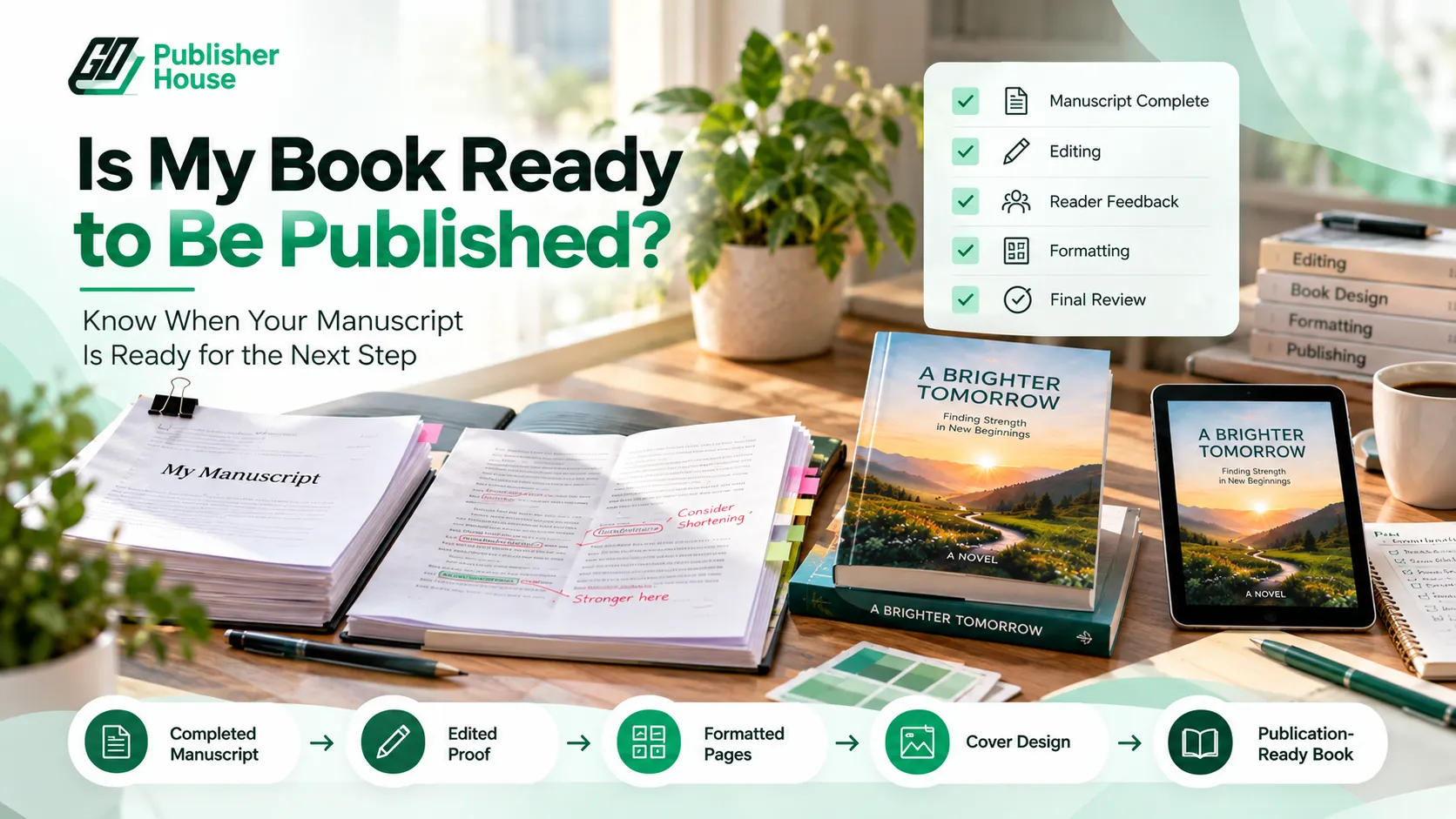
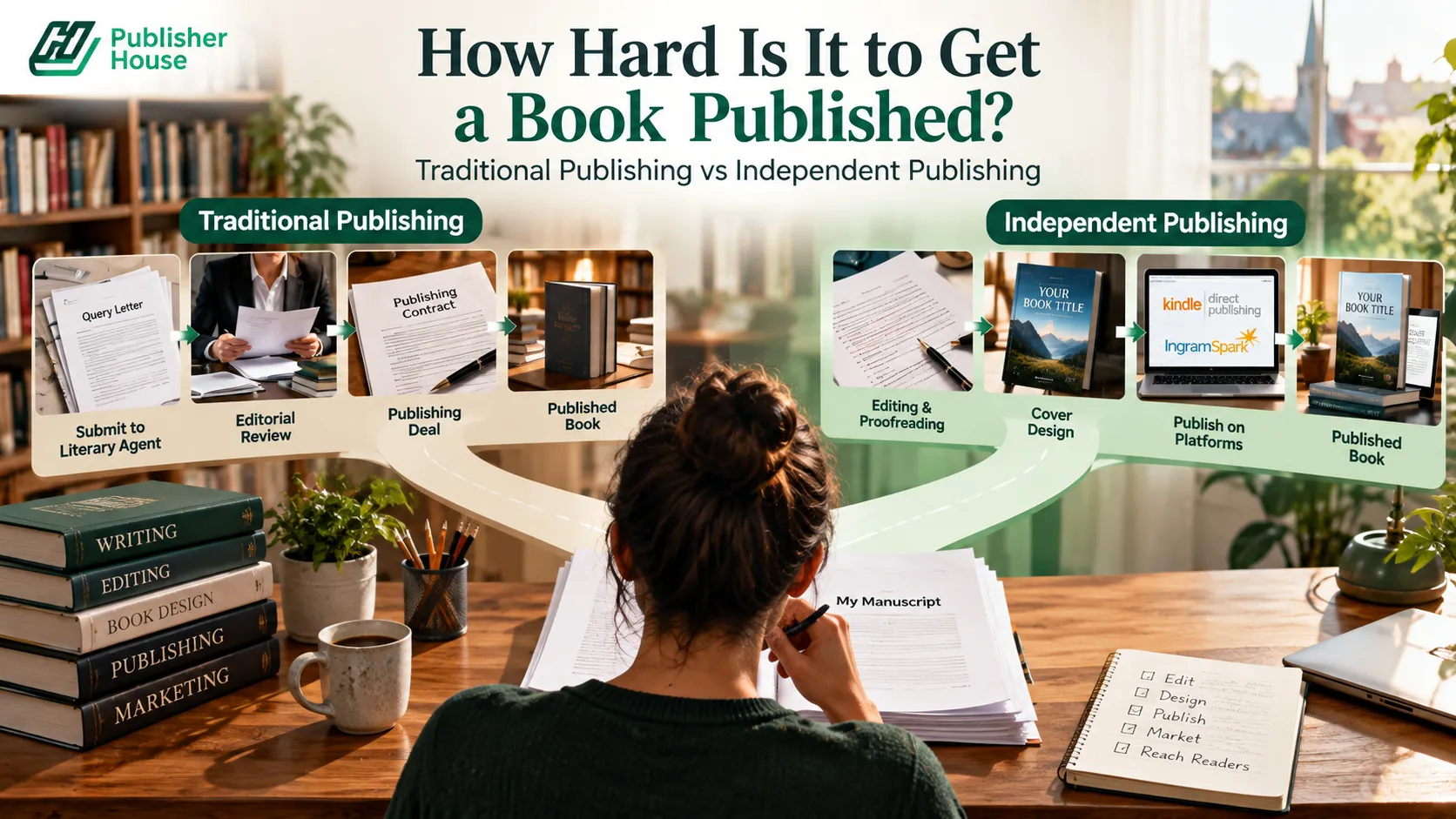
If you’re wondering how hard is it to get a book published, the answer depends on your chosen route. Getting accepted by a publisher can be difficult and slow. Publishing independently is more accessible, but it brings different responsibilities.
Finishing a book is already a major achievement. However, turning that work into something readers can buy takes several more steps. Writers must consider quality, presentation, costs, sales channels, and how readers will discover the finished work.
The good news is that writers now have more choices than ever. A strong manuscript can follow the traditional publishing route or reach readers through independent channels. Neither path guarantees commercial success, but both can lead to publication.
In this blog, we’ll explain both routes, their challenges, and practical steps to improve your publishing journey.
How Hard Is It to Get a Book Published for a New Author?
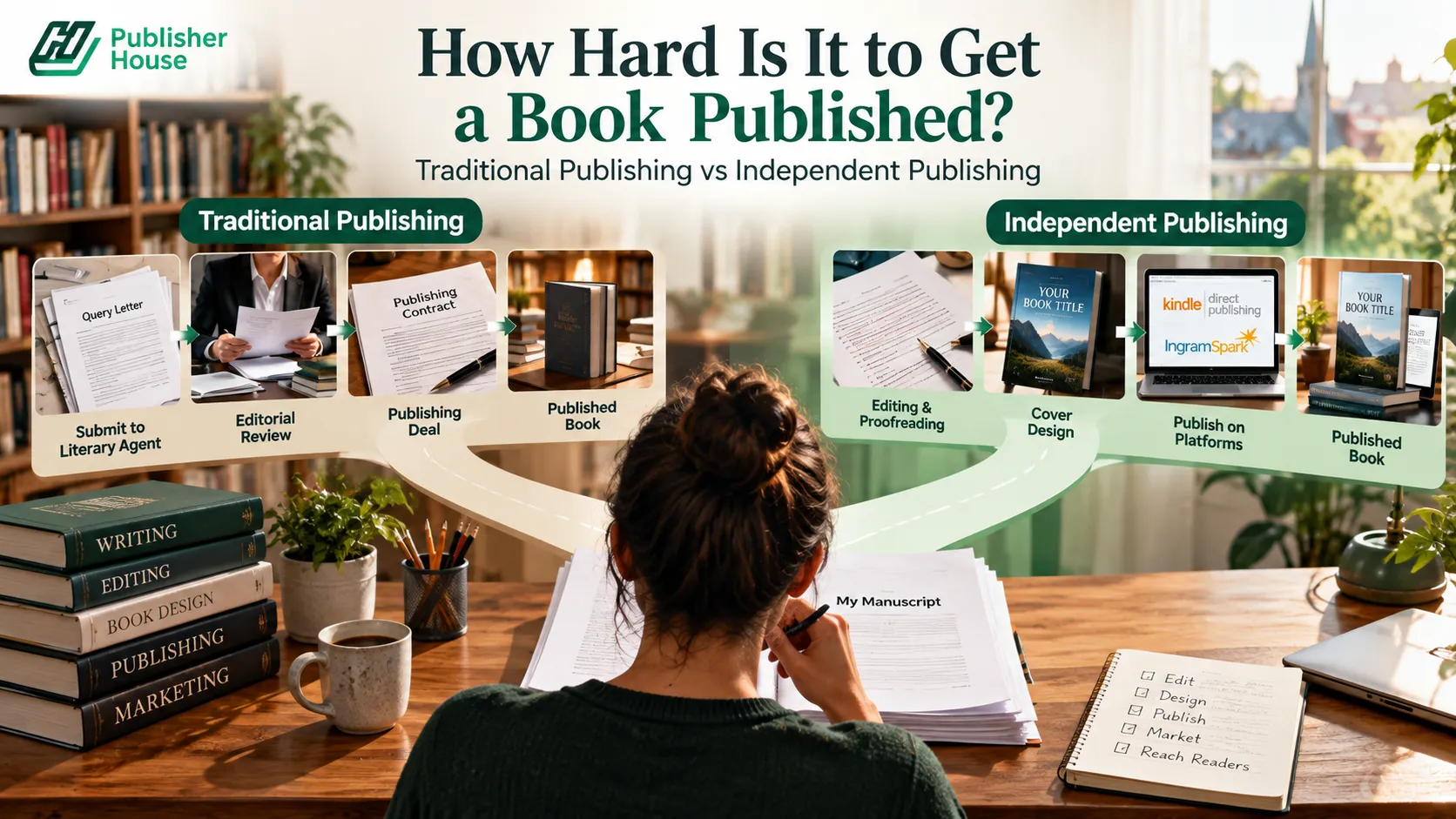
How difficult is it to get a book published as a new author? The answer depends largely on the path you take. Traditional publishing is highly selective, while independent publishing removes many common barriers.
The publishing industry receives a huge volume of new work every year. Agents and editors can’t accept every promising project. They consider writing quality, audience demand, genre, timing, and commercial potential.
Some literary agents receive thousands of submissions each year. Only a small number may move forward. That means rejection doesn’t always suggest a weak book. A book publisher also considers whether a title fits its current list. A strong story can still arrive at the wrong time. A similar title may already be planned for release.
For beginners, several points matter most:
- A polished book has a stronger starting position.
- Genre and market demand can influence interest.
- Rejection is common on the conventional route.
- Independent publication gives writers greater control.
- Publication alone doesn't guarantee strong sales.
Is it hard to publish a book? It can be. However, the difficulty changes considerably depending on the path you choose.
Why Is Traditional Publishing So Competitive?
Traditional publishing is competitive because companies make selective commercial investments. They usually commit resources, production support, and money to titles they acquire.
Many authors first seek representation before approaching larger companies. Major firms often work through agents rather than reviewing every unsolicited submission directly.
A literary agent looks for projects that combine strong writing with market potential. When interested, the agent can represent the writer and approach suitable editors.
The first introduction often comes through a query letter. It needs to present the story, hook, genre, and relevant writer information clearly.
For certain nonfiction projects, a book proposal may also be required. It can explain the concept, intended readership, competing titles, chapter structure, and market opportunity.
Getting representation still doesn’t guarantee a deal. The work then needs to attract an editor and survive further commercial consideration.
Book Selection Process
An acquisitions editor considers whether a project suits the company’s list and target readers. Other teams may also consider expected sales, positioning, production costs, and timing.
Each publishing house has its own priorities. One may want commercial fiction, while another focuses on children’s titles, history, business, or specialist subjects.
Writers should therefore study the submission guidelines before approaching anyone. Sending unsuitable material wastes time for both sides.
A manuscript submission should follow every instruction provided by the publisher. Small details matter when editors are working through crowded inboxes.
If an offer follows, the writer may receive a publishing contract. Its terms can cover rights, royalties, deadlines, territories, formats, and other responsibilities.
What Are the Chances of Getting a Book Published?
The chances of getting a book published can’t be reduced to one reliable percentage. Results depend on genre, writing quality, market demand, representation, and the publishers approached.
Some online estimates show very low acceptance rates for traditional deals. However, there is no single industry-wide figure. Every agent and publisher follows a different selection process.
Competition is still strong, especially for first-time writers. That is why careful revision and honest feedback can make a real difference before submission.
Beta readers can point out confusing sections, slow chapters, or weak character development. A manuscript evaluation can also give a wider view of structure, pacing, and overall quality.
If ” Is my book good enough to be published ‘’ is a question on your mind, start with honest feedback and careful revision. An expert review can also identify weak areas before submission.
How Can Professional Editing Improve a Book Before Publication?
Editing improves clarity, consistency, structure, and readability before a book reaches readers. Different editorial stages solve different problems.
Developmental editing looks at the bigger picture. For fiction, that may include plot, pacing, character development, and structure. For nonfiction, it may address logic, organisation, and the strength of the central argument.
Copy editing works more closely with individual sentences. It addresses language, consistency, grammar, tone, and unnecessary repetition.
Proofreading usually comes later. It catches remaining spelling, punctuation, layout, and typographical errors before release.
At Go Publisher House, we can support writers through these stages rather than treating publication as one upload. Our book publishing services can help turn an unfinished project into a professionally prepared title.
Is Self-Publishing Easier Than Finding a Publisher?
Is it easy to get a book published through self-publishing? In many ways, yes, because you can avoid the traditional approval process. However, creating a book still takes time, planning, and effort.
Writers who choose this route manage many tasks themselves. They make decisions about production, pricing, presentation, release dates, and promotion. Professional support can also be used for areas that require specialist skills.
Modern self-publishing platforms have made reaching readers much easier. They allow writers to release books without waiting for acceptance from a traditional publisher.
Amazon Kindle Direct Publishing allows writers to publish digital and print versions. With Amazon KDP, authors can manage pricing, formats, and other publishing details.
IngramSpark is another option for independent writers. It supports print and digital distribution across different sales channels. The right choice depends on the formats and markets you want to reach.
Learning how to publish a book can help you make these decisions with more confidence. It also helps you compare costs, control, timelines, rights, and distribution.
Which Book Formats Can Independent Authors Choose?
Independent writers can release the same title in different formats. The right choice depends on budget, reader preference, genre, and distribution goals.
eBook Publishing
Digital editions are easy to access on phones, tablets, and e-readers. They also remove the printing, physical storage, and shipping needs associated with printed copies.
Paperback Publishing
Softcover books are lightweight, practical, and usually more affordable for readers. They are a common choice for fiction and general nonfiction.
Hardcover Publishing
A hardback edition gives a book a more durable and premium finish. It is often chosen for special releases, collector editions, and books meant to last longer.
Print on Demand
Books are produced only when a customer places an order. This lowers the need for large print runs and helps writers avoid storing unsold copies.
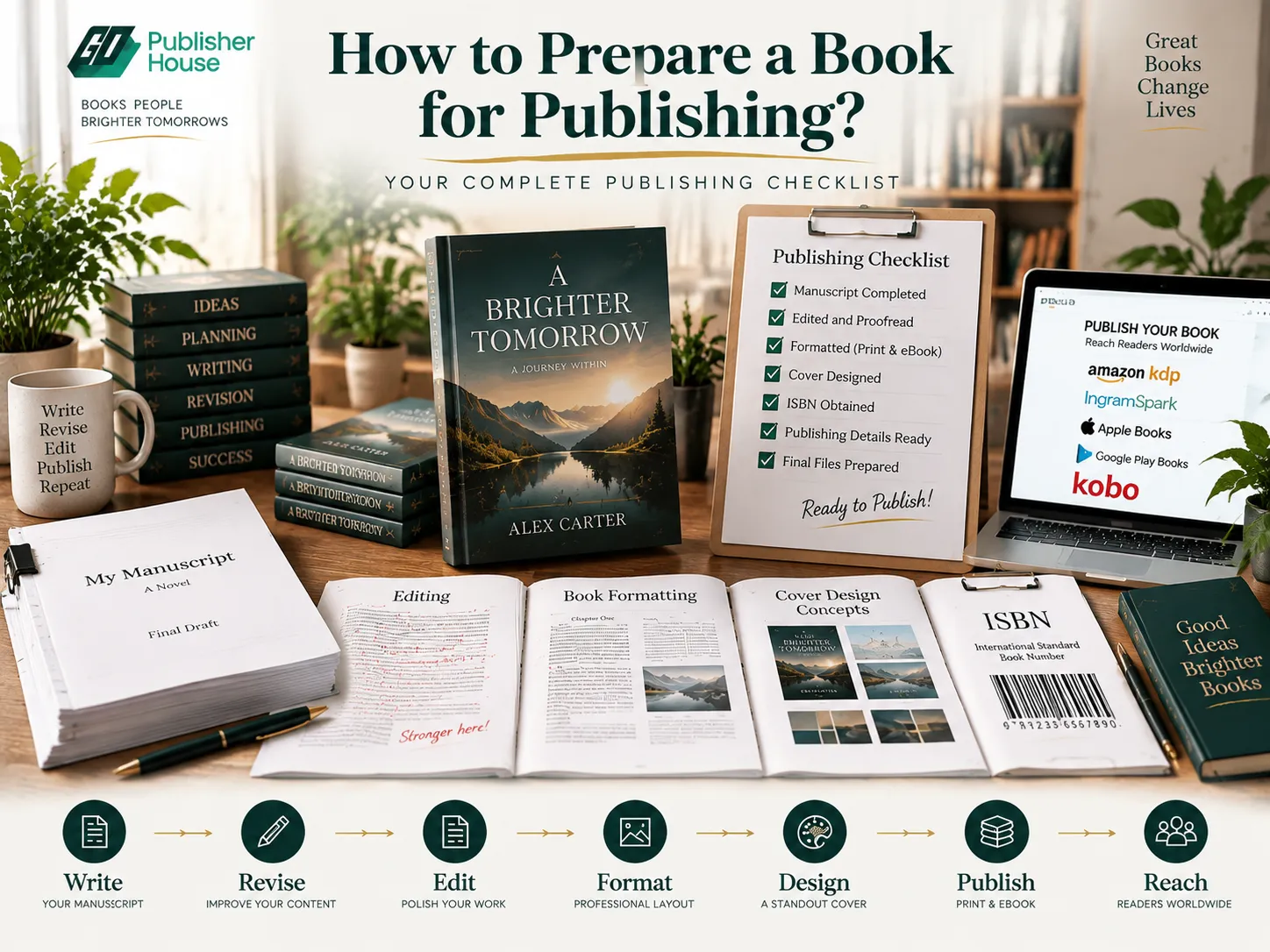
What Technical Details Are Needed Before a Book Goes Live?
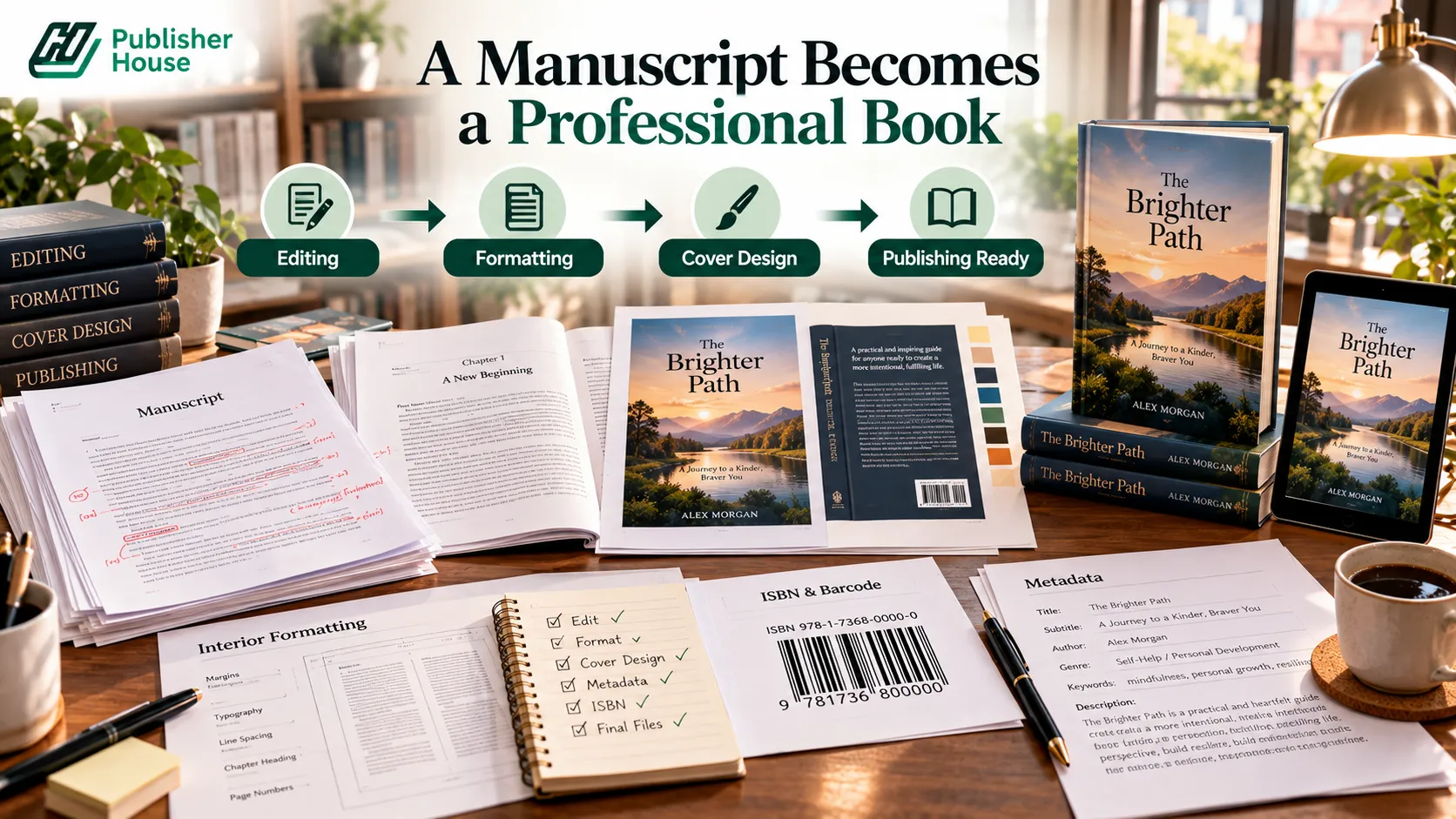
A finished text still needs careful production before release. Readers can notice presentation problems quickly, even when the writing itself is strong.
ISBN
This unique identifier helps distinguish a specific edition and format. Requirements can vary depending on the publishing route and platform.
Book Metadata
Accurate listing details help retailers organise and display a title correctly. These details can include the title, author name, description, category, and other publishing information.
Book Formatting
The interior needs to match the requirements of its final format. Digital and printed editions often need different layouts and file preparation. Book formatting services can help create a clean, consistent reading experience.
Typesetting
Good page layout makes printed books easier and more comfortable to read. It covers spacing, margins, chapter openings, fonts, and page numbers.
Book Cover Design
The cover should reflect the book’s genre, tone, and intended audience. It should also stay clear and attractive when viewed as a small thumbnail. Book cover design services can help create a polished look that fits the book’s audience and genre.
How Can a Published Book Reach More Readers?
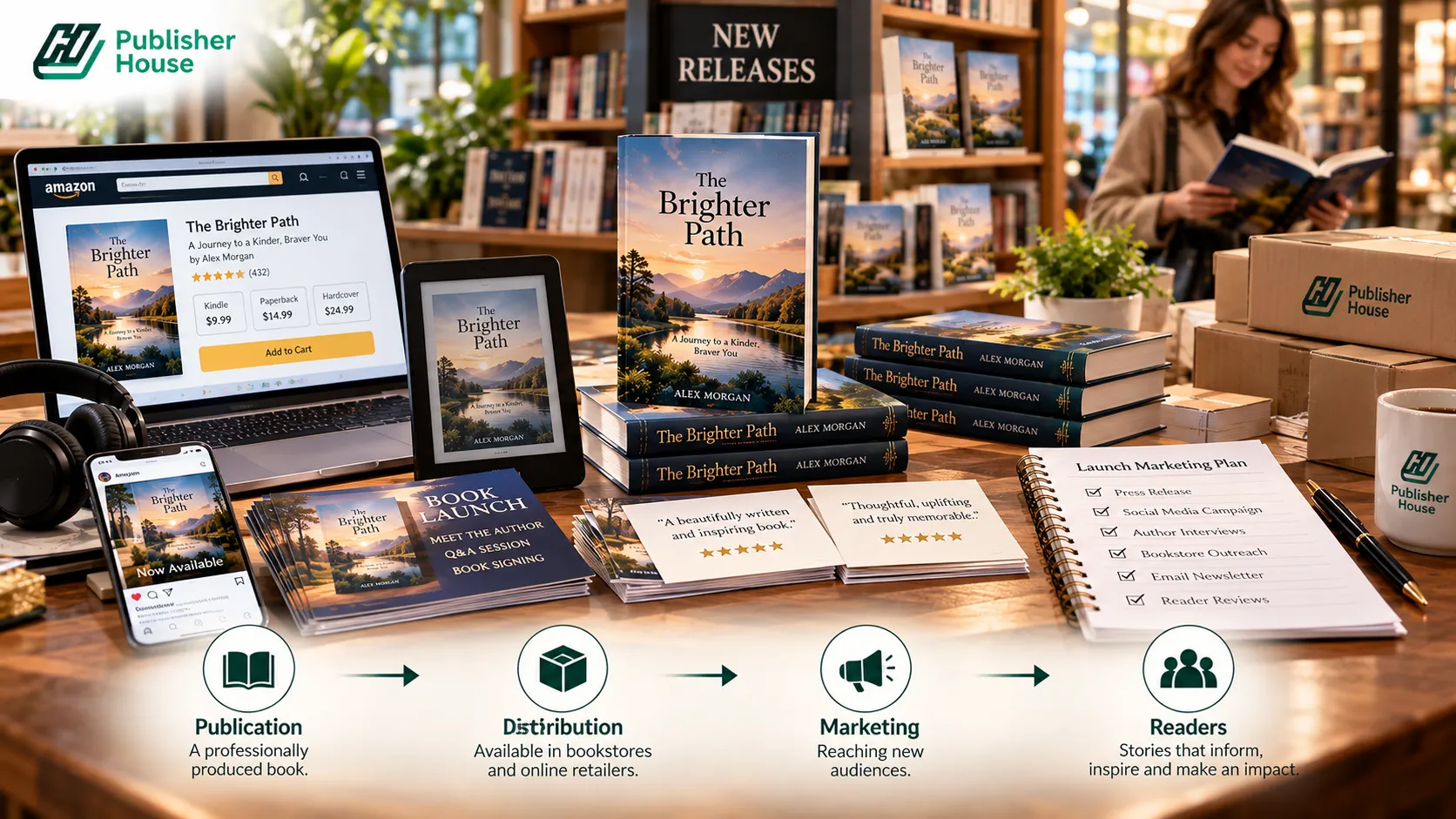
Getting a title onto a sales platform is only part of the journey. Readers still need ways to discover, understand, and buy it.
Book Distribution
This connects finished titles with retail and ordering channels. The available reach depends on the publishing route and distributor.
Book Marketing
Promotion can include retailer pages, reviews, advertising, publicity, and reader outreach. Book marketing services can help organise these efforts and improve visibility around a release.
Book Launch
A planned release creates a clear moment around the book. Preparation usually works best when it begins before publication rather than after the title goes live.
Author Branding
A consistent identity can connect a writer’s website, social presence, books, and future releases. Author branding services can help keep that identity clear and recognisable across different platforms.
Why Should You Choose Go Publisher House?
Managing editors, designers, publishing platforms, distributors, and marketers separately can become difficult. Having these stages handled through one team can make the process more organised.
At Go Publisher House, we provide end-to-end support for writers who want help beyond basic publication. Our work covers editing, design, production, publishing, distribution, promotion, ghostwriting, and brand development.
We can also assist with audiobook production when a project needs an audio edition. Instead of treating each stage as a separate problem, we help connect the process from manuscript preparation to release.
That approach is useful for first-time writers who feel overwhelmed by technical requirements. It’s equally useful for experienced writers who want support while protecting their time.
How Long Does the Book Publishing Process Take?
The timeline depends on the route, the condition of the manuscript, and the production work required. Traditional publishing generally takes longer because several approval and production stages are involved.
Even after a deal is signed, editing, design, scheduling, printing, sales preparation, and promotion can make traditional publishing a lengthy process.
Independent writers can often move faster because they control the schedule. However, rushing isn’t always helpful. Editing, design, preparation, and final checks still deserve enough time.
A realistic schedule should leave room for revisions and unexpected changes. Publishing quickly has little value if the final product feels unfinished.
What Common Mistakes Make Publishing More Difficult?
Many publishing problems begin before a writer approaches an agent or uploads a finished file. Preparation can prevent avoidable setbacks.
One common mistake is submitting too early. A completed first draft is rarely the strongest possible version of a book.
Another problem is ignoring the target reader. A writer should understand who the book serves and why those readers would choose it.
Presentation also matters. Poor interiors, weak covers, unclear descriptions, and inconsistent information can make a good title appear unprofessional.
Finally, writers shouldn’t assume publication automatically creates an audience. Discoverability requires planning, especially when releasing independently.
Conclusion
For writers who want to reach readers, publishing can make the time and effort feel worthwhile. The important part is choosing a route that matches the project’s goals.
So, how hard is it to get a book published? Traditional publishing can be highly competitive, while independent publication removes many acceptance barriers. Yet both routes demand preparation, patience, and standards.
A polished manuscript is only the first step in book publishing. The finished title also needs thoughtful production, presentation, distribution, and a plan for reaching readers.
If you’re ready to move from a draft to a professionally published title, contact Go Publisher House. We can support the journey from editing and design through production, distribution, promotion, and beyond.
Frequently Asked Questions
Can a first-time author get published?
Yes. Debut writers receive publishing deals and also release books independently. A first book still needs to meet standards and suit its intended market.
Do you need an agent to publish a book?
Not always. Many larger companies prefer represented submissions, while some smaller presses accept direct approaches. Independent writers don’t need representation to release their own titles.
Can you publish a book without paying money?
Traditional publishers generally cover the standard costs of producing books they acquire. However, writers who publish independently may pay for editing, design, marketing, and other services themselves.
Is publishing a book on Amazon difficult?
The technical upload process is designed to be accessible. Preparing files, choosing accurate details, setting pricing, and attracting readers require more work.
How long should a manuscript be before publishing?
There’s no universal length for every book. Appropriate word count varies by genre, audience, subject, and publishing route. Writers should compare their project with established titles serving similar readers.